RV travel gives freedom and comfort. Many RV owners now use solar power for clean energy on the road. Solar panels collect power during the day. Batteries store that power for night use or cloudy days. The battery is the heart of the system. A weak battery can ruin the whole setup.
In the past, most RVs used lead-acid or AGM batteries. These batteries work, but they have limits. They are heavy. They charge slowly. They also wear out faster. Today, lithium batteries are changing RV solar systems for the better.
Lithium batteries store more power in less space. They charge fast and last many years. They also work well with modern solar controllers. Because of these benefits, many RV owners now search for the best lithium batteries for rvs. Choosing the right one helps you enjoy quiet, steady, and reliable power wherever you travel.
Why Lithium Batteries Are Ideal for RV Solar Systems
Higher energy efficiency compared to AGM and lead-acid
Lithium batteries use power more wisely. Almost all stored energy is usable. Lead-acid batteries only allow about half their power to be used safely. Lithium batteries give more energy from the same size battery. This means longer use time for lights, fans, and devices.
Faster charging with solar panels
Solar charging time matters in an RV. Lithium batteries charge much faster than AGM or lead-acid types. They accept high current without damage. This helps you store more solar power during short sunny hours. Faster charging also means less stress on your solar system.
Longer lifespan and deeper usable capacity
Lithium batteries last many years. Most offer thousands of charge cycles. Lead-acid batteries wear out much sooner. Lithium batteries can also discharge deeper without harm. You get more daily power without reducing battery life.
Weight savings and better space management in RVs
Weight is important in any RV. Lithium batteries are much lighter than traditional batteries. One lithium battery can replace two or more lead-acid units. This saves space and helps keep your RV balanced and efficient.
Improved safety with built-in battery management systems
Modern lithium batteries include a built-in Battery Management System, or BMS. This system protects against overcharging, overheating, and short circuits. It also helps balance cells inside the battery. This added safety makes lithium batteries a smart and reliable choice for RV solar systems.
Key Factors to Consider When Choosing Lithium Batteries for RVs
Choosing the right battery helps your RV solar system work better. Each factor below plays an important role. A smart choice saves money and avoids future problems.
Battery Capacity (Ah and kWh)
Battery capacity shows how much power a battery can store. It is often listed in amp-hours (Ah). Some brands also show kilowatt-hours (kWh). Higher numbers mean more stored energy.
RV solar users should first look at daily power needs. Lights, fans, phones, and laptops use small amounts of power. Fridges, TVs, and inverters use much more.
Weekend campers usually need less capacity. A single 100Ah lithium battery may be enough. Full-time RV living needs more stored power. Many full-time travelers use two or more batteries or higher-capacity models.
Voltage Compatibility
Most RVs use 12V battery systems. These systems are simple and easy to expand. Many lithium batteries are made for 12V setups and drop into existing RV systems.
Some large solar systems use 24V setups. These systems reduce current and improve efficiency. They work well with large inverters and solar arrays.
Always match battery voltage with your inverter and charge controller. Using the wrong voltage can damage equipment or stop the system from working.
Built-in BMS and Safety Features
A built-in Battery Management System is very important. The BMS protects the battery and your RV.
It guards against overcharging and over-discharging. It also stops damage from short circuits. These protections help extend battery life and prevent safety issues.
Temperature protection matters for RV travel. Some batteries block charging in freezing weather. Others include heating features for cold climates. Good temperature control keeps the battery safe in both hot and cold environments.
Size, Weight, and Fitment
Not all batteries fit every RV. Battery size and shape matter. Many RVs use standard group sizes like Group 24 or Group 31. Always check your battery compartment before buying.
Lithium batteries are lighter than lead-acid models. This helps with RV weight limits. Less weight also improves handling and fuel efficiency.
Proper balance in storage bays is important. Even light batteries should be mounted securely to avoid movement during travel.
Cycle Life and Warranty
Cycle life shows how many times a battery can be charged and discharged. Lithium batteries often offer several thousand cycles. Higher cycle ratings mean longer service life.
Warranty terms matter just as much. A strong warranty shows brand confidence. It also protects your investment over time.
For long-term RV use, look for batteries with clear cycle ratings and solid warranties. These features help ensure reliable power for many years on the road.
Best Lithium Batteries for RV Solar Setups (Top Picks for 2026)
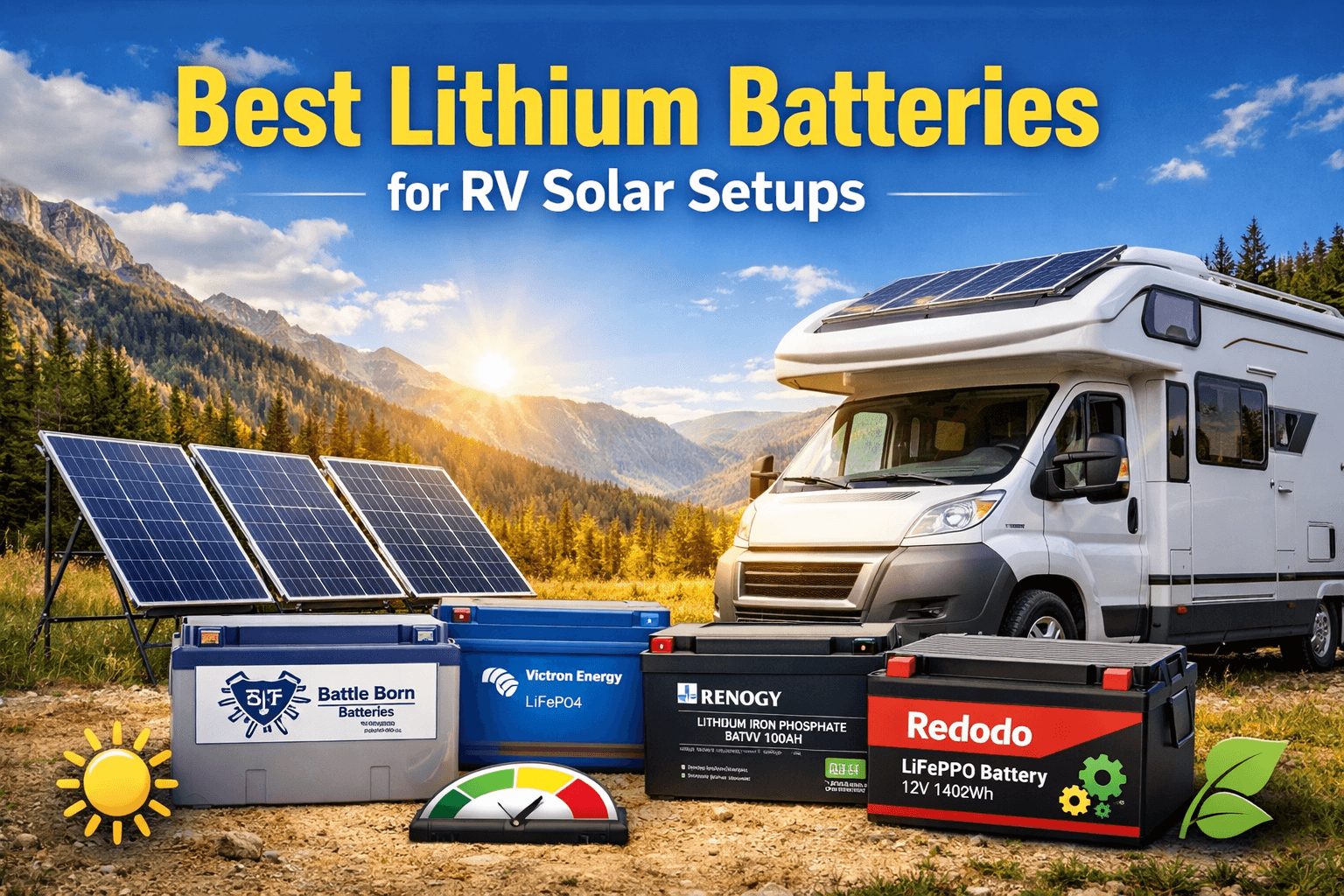
Below are five strong battery choices for RV solar systems. Each option fits a different travel style and power need. All are reliable lithium batteries made for RV use.
#1 Battle Born 100Ah 12V LiFePO₄ Battery

The Battle Born 100Ah lithium battery is built for serious RV solar use and full-time off-grid travel. Designed as a drop-in replacement for traditional lead-acid batteries, it delivers steady, reliable power without requiring system modifications. Many RV owners trust this battery for daily charging and deep discharging during long trips.
This battery uses lithium iron phosphate (LiFePO₄) chemistry, known for its safety and stability. A built-in Battery Management System (BMS) protects against overcharging, deep discharge, overheating, and short circuits. These protections ensure safe operation and long-term durability in demanding RV environments.
Battle Born batteries work seamlessly with solar charge controllers and RV inverters. Their consistent voltage output helps sensitive electronics run smoothly, making them a dependable choice for extended off-grid adventures.
- Voltage: 12V
- Capacity: 100Ah
- Battery Type: LiFePO₄
- Weight: Around 31 lbs
- Built-in BMS: Yes
- Very reliable and well-tested
- Stable power output for solar charging
- Long lifespan with deep discharge support
- Strong customer support reputation
- Higher price than many other brands
- Heavier than some newer lithium options
#2 Victron Energy 12.8V 100Ah LiFePO₄ Battery

The Victron Energy 12.8V 100Ah LiFePO₄ battery is designed for advanced RV solar systems where precision and system control matter. It is commonly chosen by users who want seamless integration with Victron inverters, charge controllers, and monitoring equipment.
Victron focuses heavily on system communication and performance. This battery works best as part of a complete Victron ecosystem, allowing accurate energy monitoring and efficient power flow. RV owners who carefully track power usage often prefer this setup.
Built with high-quality cells and a strong outer casing, the battery performs reliably under heavy loads and long solar charging sessions. It is well suited for larger RV solar systems running fridges, inverters, and multiple devices simultaneously.
- Voltage: 12.8V
- Capacity: 100Ah
- Battery Type: LiFePO₄
- Weight: About 33 lbs
- Smart System Support: Yes
- Excellent system integration
- Strong build quality
- Ideal for complex solar setups
- Reliable performance under heavy loads
- Higher cost
- Works best within the Victron ecosystem
- Not ideal for simple plug-and-play users
#3 Renogy 12V 100Ah Pro LiFePO₄ Battery

The Renogy 100Ah Pro LiFePO₄ battery is designed for RV travelers who move through different climates and rely on solar power. It fits easily into most RV battery compartments and works smoothly with common RV solar systems.
Some versions of this battery include self-heating technology, allowing safe charging in cold weather. This makes it a solid option for winter camping and mountain travel. Many models also offer Bluetooth monitoring, letting users check battery status, voltage, and charge levels directly from a smartphone.
Renogy batteries are known for fast charging and stable output. They are compatible with most RV solar charge controllers and provide modern features without complicated installation, making them ideal for users who want convenience and performance.
- Voltage: 12V
- Capacity: 100Ah
- Battery Type: LiFePO₄
- Built-in BMS: Yes
- Extra Features: Bluetooth monitoring, self-heating (model dependent)
- Handles cold weather better
- Fast solar charging
- Smart monitoring options
- Good balance of features and price
- Many versions available, features vary
- Must check exact model before buying
- Slightly higher cost than basic batteries
#4 Enerakkus 12V 100Ah LiFePO₄ Battery

The Enerakkus 100Ah LiFePO₄ battery is designed for simple and lightweight RV solar systems. It is significantly lighter than traditional lead-acid batteries and installs easily, making it ideal for small RVs, camper vans, and compact overlanding rigs.
This battery includes a built-in Battery Management System (BMS) that protects against overcharging, over-discharging, overheating, and short circuits. It also features Bluetooth monitoring, allowing users to track battery status and performance directly from a smartphone — a helpful feature for beginners.
Enerakkus focuses on ease of use and compact design. This battery works well for lights, fans, water pumps, and small inverters. It is best suited for RV owners who want a straightforward lithium upgrade without advanced system requirements.
- Voltage: 12V
- Capacity: 100Ah
- Battery Type: LiFePO₄
- Weight: About 23 lbs
- Bluetooth Monitoring: Yes
- Very lightweight
- Easy to install
- Lower price point
- Good for small solar systems
- Less known brand
- Shorter track record than premium options
- Warranty support may vary by seller
#5 Redodo 12V 140Ah LiFePO₄ Battery

The Redodo 12V 140Ah LiFePO₄ battery is built for RV owners with higher power demands and longer off-grid stays. Its larger capacity stores significantly more energy than standard 100Ah batteries, making it ideal for running refrigerators, inverters, and other daily-use appliances.
Using one high-capacity battery can reduce wiring complexity and save space in RV solar setups. This is especially useful for rigs with limited battery compartments. The built-in Battery Management System (BMS) protects against overcharging, over-discharging, overheating, and short circuits.
Redodo batteries are commonly chosen by full-time RVers who need consistent, reliable power. This model delivers long runtime between charges and works well in solar systems designed for heavy and continuous energy usage.
- Voltage: 12V
- Capacity: 140Ah
- Battery Type: LiFePO₄
- Built-in BMS: Yes
- Designed For: Solar & RV use
- Higher capacity for daily use
- Fewer batteries needed
- Good value for large power needs
- Suitable for full-time RV setups
- Larger physical size
- Heavier than 100Ah models
- May not fit small battery compartments
Comparing These Lithium Batteries for RV Solar Use
Choosing the right lithium battery depends on how you travel and how much power you need. The batteries discussed above may look similar, but they serve different RV lifestyles.
Capacity comparison (100Ah vs 140Ah)
A 100Ah lithium battery is a common choice for RV solar systems. It works well for lights, fans, water pumps, and basic electronics. Weekend campers and short trips usually find 100Ah enough. A 140Ah battery stores more energy in one unit. It supports longer off-grid stays and higher daily use. Full-time RVers often prefer higher capacity to avoid frequent charging.
Weight and size differences
Most 100Ah lithium batteries weigh between 23 and 33 pounds. They are much lighter than lead-acid batteries. A 140Ah battery is heavier and larger, but it replaces the need for multiple smaller batteries. Space matters in RV battery bays. Always measure before buying.
Charging performance with solar panels
All lithium batteries charge faster than AGM or lead-acid types. They accept steady current from solar panels and reach full charge quicker. Higher-capacity batteries need more solar input. A 140Ah battery benefits from larger solar arrays to recharge efficiently.
Best option for beginners vs experienced RVers
Beginners often do well with simple 100Ah batteries. These are easy to install and manage. Experienced RVers may prefer higher-capacity batteries or smart systems. These offer better control and support larger solar setups.
How to Size Lithium Batteries for an RV Solar Setup
Battery sizing is one of the most important steps in building an RV solar system. A battery that is too small causes stress and power loss. A battery that is too large may waste money.
Estimating daily power consumption
Start by listing all devices you use daily. Lights, fans, phone chargers, and laptops use small amounts of power. Fridges, microwaves, and inverters use more. Add up the daily watt-hours for each item. This gives a clear picture of how much energy you need.
Matching battery capacity with solar panel wattage
Your battery and solar panels must work together. A large battery needs enough solar input to recharge fully. For example, a 100Ah battery works well with 200–400 watts of solar. A 140Ah battery may need more panels. Balance helps prevent slow charging and power shortages.
Planning for cloudy days and backup power
Solar output drops on cloudy days. Extra battery capacity helps during poor weather. Many RV owners plan for at least one full day of backup power. This keeps lights and fridges running when solar input is low.
Installation Tips for Lithium Batteries in RVs
Proper installation helps lithium batteries perform well and last longer. Even the best battery can fail if installed incorrectly.
Proper wiring and fusing
Use cables rated for lithium battery current. Thin wires can overheat. Always install fuses close to the battery. This protects the system from short circuits and overloads.
Battery placement and ventilation
Lithium batteries do not need the same ventilation as lead-acid batteries. Still, place them in a dry and cool area. Avoid direct heat from engines or exhaust systems. Secure the battery to prevent movement during travel.
Connecting lithium batteries to solar charge controllers
Use a solar charge controller that supports lithium profiles. Many modern controllers have lithium settings. This ensures proper charging voltage and protects battery life.
Safe parallel and series connections
Parallel connections increase capacity. Series connections increase voltage. Follow manufacturer guidelines. Use identical batteries when connecting multiple units. This keeps the system balanced and safe.
Common Mistakes RV Owners Make When Buying Lithium Batteries
Many RV owners rush the buying process. This often leads to problems later.
Choosing too little battery capacity
Underestimating power needs is common. Small batteries drain quickly and shorten lifespan. It is better to choose slightly more capacity than needed.
Ignoring temperature limits
Some lithium batteries cannot charge in freezing weather. RV owners who camp in cold climates must check temperature ratings. Batteries with heating features are better for winter travel.
Mixing lithium and lead-acid batteries
Mixing battery types causes charging issues. Lithium and lead-acid batteries behave differently. Always use one type in a system.
Overlooking charger and inverter compatibility
Not all chargers support lithium batteries. Using the wrong charger can damage the battery. Always confirm compatibility before installation.
Maintenance and Long-Term Care for RV Lithium Batteries
Lithium batteries need less care than lead-acid batteries, but basic maintenance still matters.
Charging best practices
Avoid constant overcharging. Use proper lithium charging settings. Do not drain the battery to zero often. Balanced use improves lifespan.
Storage tips during off-season
Store batteries partially charged if the RV is not used for long periods. Keep them in a cool, dry place. Avoid extreme temperatures during storage.
Monitoring battery health using Bluetooth or monitors
Many lithium batteries include Bluetooth monitoring. This helps track voltage, charge level, and health. Monitoring helps catch problems early.
Extending battery lifespan
Use quality chargers and solar controllers. Avoid extreme heat. Follow manufacturer guidelines. Good habits can keep lithium batteries working for many years.
Final Thoughts
Lithium batteries have changed RV solar systems for the better. They are lighter, stronger, and more efficient than older battery types. Choosing the right battery depends on how you travel and how much power you need. Beginners often do well with simple 100Ah options. Full-time RV travelers benefit from higher capacity and smart features.
Careful planning, proper installation, and good maintenance make a big difference. When chosen wisely, the best lithium batteries for rvs provide quiet, clean, and reliable power. This lets you enjoy freedom on the road without worrying about energy limits.