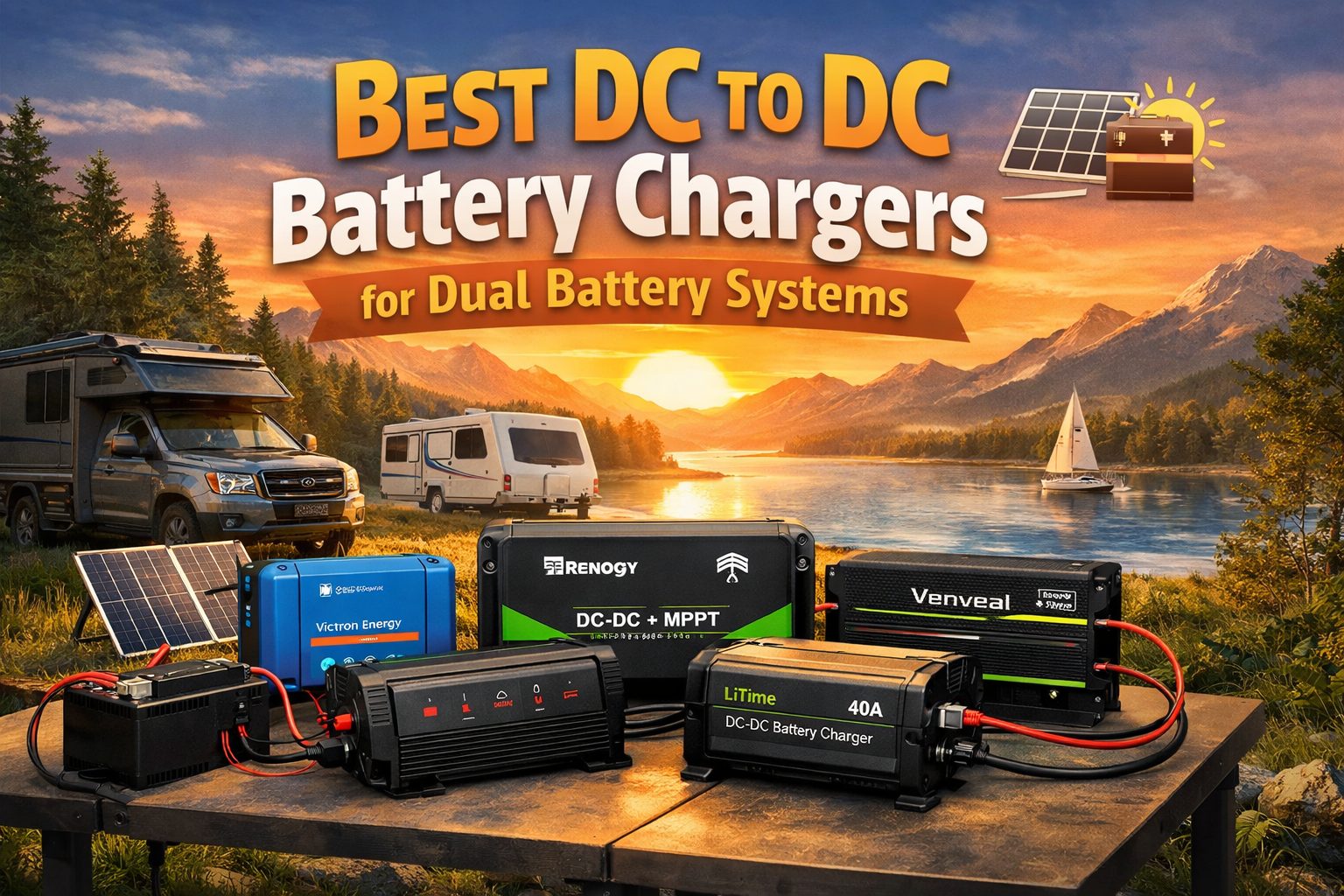
A dual battery system helps you run extra power without draining your main battery. Many people use it in RVs, vans, boats, and off-grid setups. It powers lights, fridges, tools, and other devices. A DC to DC battery charger is the heart of this system. It sends safe and steady power from one battery to another. It also keeps both batteries healthy.
Modern vehicles need smarter charging solutions. Standard charging methods often fail to deliver stable power. This is where DC to DC chargers become useful. Some models also support solar charging. That feature makes them work like the best solar charge controllers in mixed power systems. They help manage energy from the alternator and solar panels at the same time. Choosing the right charger improves battery life and charging speed. It also reduces power loss and system damage.
What Is a DC to DC Battery Charger?
A DC to DC battery charger moves power from one DC source to another. It usually takes power from the vehicle’s starter battery or alternator. Then it converts that power to the right voltage for the second battery. The charger controls how much power flows during charging. This keeps the battery safe and fully charged.
How a DC to DC Charger Works
The charger receives power from the vehicle while it is running. It checks the input voltage first. Then it adjusts the output voltage to match the battery type. The charger follows a multi-stage charging process. This includes bulk, absorption, and float stages. Each stage helps charge the battery in a safe way. The process reduces heat and stress on the battery.
Alternator Charging vs DC to DC Charging
Alternator charging sends power directly to the second battery. It does not control voltage well. This can cause overcharging or weak charging. DC to DC charging is more accurate. It regulates voltage and current before charging the battery. This makes charging safer and more efficient. It also works better with lithium batteries.
Why Modern Vehicles Need DC to DC Chargers
New vehicles use smart alternators. These alternators change voltage to save fuel. This causes unstable power output. A DC to DC charger fixes this issue. It creates steady voltage for charging. This makes it ideal for modern cars, trucks, and vans. It also supports start-stop systems.
Role of Voltage Regulation and Battery Protection
Voltage regulation is the main job of a DC to DC charger. It prevents overcharging and undercharging. Built-in protections stop damage from heat, short circuits, and reverse polarity. These features extend battery life. They also protect connected devices. This makes DC to DC chargers a safe choice for dual battery systems.
Why DC to DC Chargers Are Ideal for Dual Battery Systems
DC to DC chargers are made for modern dual battery systems. They solve many charging problems that older systems cannot handle. These chargers deliver stable power and protect batteries in all conditions. That is why they are widely used today.
Prevents Overcharging and Undercharging
Overcharging can damage a battery fast. Undercharging can reduce its capacity over time. A DC to DC charger prevents both issues. It controls the charging voltage and current at every stage. The charger follows a smart charging profile. This profile adjusts power based on battery needs. It stops charging when the battery is full. It also increases power when the battery is low. This balance keeps batteries safe and healthy.
Ensures Proper Charging for Lithium and AGM Batteries
Different batteries need different charging rules. Lithium batteries need precise voltage control. AGM batteries need stable current flow. A DC to DC charger supports multiple battery types. It lets users select the correct battery mode. This ensures proper charging every time. It also prevents damage caused by wrong voltage levels. This feature is very important in mixed battery systems.
Supports Long Battery Life
Battery replacement can be expensive. DC to DC chargers help extend battery life. They reduce heat buildup during charging. They also prevent deep discharge problems. Smart charging cycles protect internal battery parts. Over time, this results in fewer failures. Batteries stay strong for more years. This makes DC to DC chargers a cost-effective solution.
Works Well With Smart Alternators
Many modern vehicles use smart alternators. These alternators change voltage based on driving conditions. This helps save fuel but causes unstable charging. Traditional systems struggle with this change. DC to DC chargers fix the problem. They take unstable input power and convert it into steady output. This ensures reliable charging at all times. It makes them perfect for newer vehicles.
Helps Manage Power in RVs, Vans, Boats, and Off-Grid Systems
Power needs vary across setups. RVs need energy for appliances. Vans need power for tools and fridges. Boats face moisture and vibration. Off-grid systems depend on solar and alternator power. DC to DC chargers work well in all these cases. Many models support solar input. This makes them similar to the best solar charge controllers. They manage power from multiple sources. This flexibility makes them ideal for mobile and remote systems.
DC to DC Chargers vs Traditional Isolators
Many people still compare DC to DC chargers with battery isolators. Both are used in dual battery setups. But they work in very different ways. Understanding these differences helps make the right choice.
Key Differences in Charging Method
A battery isolator connects two batteries directly. It allows current to flow when the engine runs. It stops flow when the engine stops. There is no voltage control. A DC to DC charger works differently. It converts voltage before charging the second battery. It controls current and charging stages. This makes charging more accurate and safer.
Efficiency Comparison
Isolators depend on alternator voltage. If voltage drops, charging becomes weak. This leads to incomplete charging. DC to DC chargers maintain steady output. They charge batteries faster and more fully. Many models also reduce energy loss. This improves overall efficiency. Solar-supported chargers add even more value.
Battery Safety Benefits
Battery safety is a major concern. Isolators do not protect against overcharging. They cannot adjust charging based on battery type. DC to DC chargers offer built-in protections. These include over-voltage, short circuit, and thermal protection. They also stop charging when needed. This keeps batteries safe in all conditions.
When Isolators May Fail in Modern Setups
Isolators struggle with smart alternators. They also fail with lithium batteries. Voltage drop over long cables is another issue. These problems lead to poor charging. In some cases, batteries never reach full charge. DC to DC chargers handle these challenges better. They adapt to voltage changes. They support modern battery types.
Why DC to DC Chargers Are the Better Long-Term Choice
DC to DC chargers cost more at first. But they save money over time. They protect batteries and improve charging quality. They support future upgrades like solar panels. They also work with new vehicle systems. This makes them a smart long-term investment. For most users, they are the better choice.
Key Features to Look for in the Best DC to DC Battery Chargers
Not all DC to DC chargers are the same. Some offer basic features. Others include advanced controls. Knowing what to look for helps you choose the right charger.
Charging Current (Amps)
Charging current is measured in amps. Common ratings are 20A, 30A, 40A, and 50A. Higher amps charge batteries faster. But they also need thicker wires. Choose a charger based on battery size and usage. Small systems need lower amps. Large systems need higher amps.
Battery Compatibility (AGM, Gel, Lithium)
Battery compatibility is very important. Some chargers only support lead-acid batteries. Others support lithium batteries as well. Look for chargers with multiple battery modes. This allows easy switching between battery types. It also ensures safe charging. This feature is useful for future upgrades.
MPPT Solar Input Support
Many DC to DC chargers support solar panels. They include MPPT solar controllers. MPPT technology improves solar efficiency. It adjusts voltage to get more power from panels. This feature reduces the need for separate solar controllers. It also makes the charger work like one of the best solar charge controllers. This is ideal for off-grid systems.
Waterproof Rating (IP65 / IP68)
Environment matters. Some chargers are installed under the hood. Others go under seats or in storage areas. Waterproof ratings show how well a charger handles dust and water. IP65 protects against dust and water spray. IP68 offers full water protection. Choose based on installation location.
Safety Protections
Safety features protect both charger and battery. Look for reverse polarity protection. Over-voltage protection is also important. Thermal protection prevents overheating. Short circuit protection adds another safety layer. These features prevent system damage. They also improve reliability.
App Monitoring or LED Indicators
Some chargers include Bluetooth apps. These apps show charging status. They allow setting changes. LED indicators offer basic status updates. Choose based on your preference. Apps provide more control. LEDs are simpler and easier to use.
Build Quality and Heat Management
Good build quality ensures long life. Look for metal cases and solid connectors. Heat management is also important. Chargers generate heat during operation. Cooling fins or fans help reduce heat. This improves performance and safety. A well-built charger lasts longer and works better.
Best DC to DC Battery Chargers for Dual Battery Systems
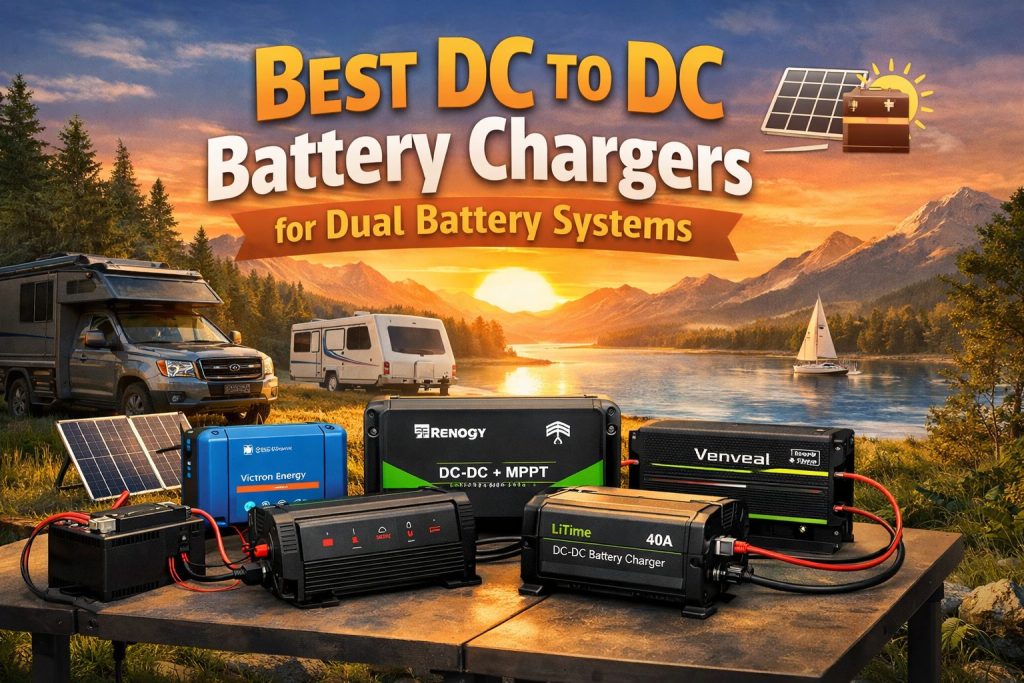
#1 Victron Energy Orion-XS Smart DC to DC Charger (50A)

The Victron Energy Orion-XS Smart DC to DC Charger (50A) is a premium charging solution designed for demanding dual-battery systems in RVs, camper vans, off-grid vehicles, and marine applications. It delivers up to 50 amps of precise, high-efficiency charging using adaptive multi-stage algorithms that protect battery health and optimize performance.
This smart charger features built-in Bluetooth connectivity through the VictronConnect app, allowing you to monitor, configure, and fine-tune charging behavior directly from your smartphone. It is fully compatible with smart alternators and includes advanced electronic protection to ensure safe, reliable operation even in harsh environments.
- Input Voltage: 9–17 V DC
- Output Current Range: 1–50 A
- Continuous Output Power: ~700 W up to 40 °C
- Efficiency: Up to 98.5%
- Voltage Adjust Range: 10–17 V
- Protection Rating: IP65 (dust-tight & water-resistant)
- Dimensions: ~137 × 123 × 40 mm
- Weight: ~0.33 kg
- Connectivity: Bluetooth Smart, VE.Direct
- Battery Support: AGM, Gel, Lithium (LiFePO₄)
- Extremely high efficiency (~98.5%) reduces heat and energy loss
- Built-in Bluetooth monitoring via VictronConnect app
- Smart alternator detection for safe engine-based charging
- IP65 rugged design resists dust, moisture, and vibration
- Supports multiple battery chemistries with custom charge profiles
- Higher price compared to basic DC-to-DC chargers
- Advanced features may require learning for beginners
- Full functionality depends on compatible devices and apps
#2 Renogy 12V 50A DC to DC Battery Charger with MPPT

The Renogy 12V 50A DC to DC Battery Charger with MPPT is a powerful all-in-one charging solution for RVs, campers, and off-grid power systems. It intelligently combines alternator charging and solar MPPT charging in a single unit, allowing you to draw power from both your vehicle and solar panels simultaneously. Supporting multiple battery chemistries—including lithium, AGM, gel, and flooded batteries—this charger automatically adapts its charging profile to maximize efficiency and battery lifespan. With built-in safety protections and a wide operating temperature range, it’s a reliable choice for long-term overlanding and mobile power setups.
- System Voltage: 12 V DC
- Max Charging Current: 50 A
- Battery Types: SLA, Gel, AGM, Flooded, Lithium
- Charging Efficiency: Up to ~97%
- Max Solar Input Power: ~660 W @ 50 A
- Max Solar Input Voltage: ~25–50 V (model dependent)
- Operating Temperature: -31°F to 149°F (-35°C to 65°C)
- Terminal Size: M8 x 1.25 mm
- Communication: RS485 (Bluetooth optional)
- Dimensions: ~244 × 146 × 96 mm
- Weight: ~1.86 kg
- Combines alternator and solar MPPT charging in one unit
- Supports smart and traditional alternators
- Compatible with lithium and lead-acid batteries
- Built-in voltage-sensitive relay (VSR)
- High charging efficiency and strong safety protections
- Wide operating temperature range
- Charging current may split between solar and alternator
- Bluetooth app requires additional module
- Larger and heavier than basic DC chargers
#3 LiTime 12V 40A DC-DC Battery Charger with MPPT

The LiTime 12V 40A DC-DC Battery Charger with MPPT is a reliable mid-range dual-battery charging solution designed for RVs, vans, and off-grid power systems. It supports both alternator and solar panel inputs using MPPT technology, ensuring efficient energy harvesting from solar panels while driving or camping. With multi-stage smart charging and compatibility with lithium (LiFePO₄), AGM, gel, and calcium batteries, the charger automatically adjusts charging profiles to protect battery health. LED indicators provide real-time charging status, and built-in safety protections ensure stable and safe operation in mobile environments.
- System Nominal Voltage: 12 V
- Charging Current: Up to 40 A (20 A low-current mode)
- Charging Efficiency: Up to ~90%
- Max Alternator Input Power: ~600–680 W
- Battery Types Supported: STD, GEL, AGM, LFP (LiFePO₄)
- Input Voltage Range: ~7 V–15.4 V
- Max Solar Input Power: ~600 W
- Operating Temperature: -10°C to 45°C
- Self-Consumption: <10 mA
- MPPT solar support improves charging efficiency
- Supports multiple battery chemistries
- Multi-stage smart charging protects battery life
- LED indicators for real-time charging status
- Reverse charging feature for maintenance and recovery
- Lower maximum current than premium 50A chargers
- Build quality is less rugged than high-end models
- Efficiency is slightly lower than top-tier units
#4 FOVAL 12V to 48V DC to DC Battery Charger (800W)

The FOVAL 12V to 48V DC to DC Battery Charger is a high-power voltage step-up converter designed for charging 48V battery systems from a standard 12V vehicle battery. Delivering up to 800W of output power, it enables rapid energy transfer—capable of replenishing approximately 1 kWh in about 75 minutes of driving. The charger supports lithium (LiFePO₄), lead-acid, AGM, gel, SLA, and calcium batteries, using multi-stage charging technology to protect battery health. Its compact, durable design and comprehensive safety protections make it well-suited for RVs, trucks, boats, and commercial vehicles requiring higher-voltage battery systems.
- Input Voltage: 12 V DC
- Output Voltage: 48 V DC
- Power Output: ~800 W
- Battery Types Supported: Lithium-ion, AGM, Gel, SLA, Calcium
- Charging Technology: Multi-stage charging
- Safety Protections: Over-current, over-voltage, under-voltage, over-temperature
- Design: Compact and durable for vehicle and marine use
- Very high 800W output for fast charging
- Ideal for charging 48V battery systems from 12V vehicles
- Supports a wide range of battery chemistries
- Strong built-in safety and protection features
- Not a standard 12V-to-12V DC-DC charger
- Requires a compatible 48V battery bank
- Less common setup for typical dual-battery RV systems
#5 Venveal 12V 40A DC to DC Charger with MPPT

The Venveal 12V 40A DC to DC Charger with MPPT is a rugged dual-input charger designed to combine alternator and solar charging in one compact unit. Delivering up to 40 amps of charging current, it uses MPPT technology to maximize solar efficiency while maintaining stable alternator charging. With an IP68 waterproof rating, this charger is built for harsh outdoor environments, making it ideal for campers, off-road vehicles, marine setups, and overlanding rigs. Simple LED indicators provide clear charging status, while the included Anderson plug allows fast and secure installation.
- System Voltage: 12 V DC
- Max Charging Current: ~40 A
- MPPT Solar Support: Yes
- Waterproof Rating: IP68
- Indicator: LED status lights
- Connector: Anderson plug
- Build: Weather-resistant housing
- IP68 waterproof rating for harsh environments
- MPPT technology improves solar charging efficiency
- Simple LED indicators for easy monitoring
- Anderson plug allows quick and secure connections
- No Bluetooth or app-based monitoring
- Lower maximum current than 50A premium chargers
How MPPT Solar Charging Improves Dual Battery Performance
MPPT solar charging plays a big role in modern dual battery systems. It helps users get more power from their solar panels. It also improves charging speed and battery health. This makes MPPT an important feature in many DC to DC chargers.
What MPPT Technology Does
MPPT stands for Maximum Power Point Tracking. It is a smart charging method used in solar systems. Solar panels do not produce the same power all the time. Sunlight, heat, and panel angle affect output. MPPT technology tracks the best voltage and current point from the solar panel. It then adjusts the charging process to pull the most power possible. This helps the battery receive more usable energy from the same panel.
Why MPPT Matters in Solar-Supported Systems
Solar-supported dual battery systems depend on efficient energy use. MPPT helps reduce energy loss during charging. It converts extra voltage into usable current. This is very helpful during low-light conditions. MPPT also works well when panels heat up. Heat usually reduces panel voltage. MPPT adjusts for this change and keeps charging stable. This makes MPPT ideal for RVs, vans, boats, and off-grid setups.
Charging Efficiency Comparison
PWM controllers are basic solar chargers. They work, but they waste energy when voltage does not match battery needs. MPPT chargers are more advanced. They can be up to 30 percent more efficient in many cases. This means faster charging and better battery performance. Over time, higher efficiency reduces battery wear. It also allows smaller solar systems to perform better. This is why MPPT is now the preferred option.
Why Many Users Search for the Best Solar Charge Controllers
Many users want reliable solar charging. They search for the best solar charge controllers to protect their investment. MPPT-based DC to DC chargers combine alternator and solar charging in one unit. This saves space and wiring cost. It also simplifies system design. Users get better performance and cleaner installations. This growing demand explains why MPPT support is now a top feature in modern chargers.
How to Choose the Right DC to DC Charger for Your Setup
Choosing the right DC to DC charger is important. The wrong charger can reduce battery life or limit performance. Several factors help determine the best option.
Match Charger to Battery Type
Battery type matters the most. Lithium batteries need precise voltage control. AGM and gel batteries need steady current. Always choose a charger that supports your battery type. Many chargers offer selectable battery modes. This feature allows safe and correct charging. It also helps if you plan to upgrade batteries later.
Consider Vehicle Size and Alternator Output
Vehicle size affects alternator output. Small cars have smaller alternators. Large vans and trucks have stronger ones. Choose a charger that matches alternator capacity. A charger with too high amp rating can overload the system. A balanced setup improves reliability and charging speed.
Solar Integration Needs
If you use solar panels, choose a charger with MPPT input. This removes the need for a separate solar controller. It also improves efficiency. Consider panel size and voltage limits. Make sure the charger supports your solar setup. This step avoids future compatibility issues.
Environment and Mounting Location
Installation location affects charger choice. Under-hood installs need heat-resistant and waterproof units. Interior installs need good airflow. Marine setups need high waterproof ratings. Always check IP ratings and temperature limits. This ensures long-term safety and performance.
Budget vs Long-Term Reliability
Low-cost chargers may work short-term. But they often lack protections and efficiency. High-quality chargers cost more upfront. They last longer and protect batteries better. Over time, this saves money. Reliable chargers reduce maintenance and replacement costs. This makes them a smart long-term investment.
Common Installation Mistakes to Avoid
Installing a DC to DC charger the wrong way can reduce performance. It can also damage batteries and wiring. Avoiding common mistakes helps your system run safely and efficiently.
Incorrect Wire Size
Wire size is very important in DC systems. Thin wires cause voltage drop. This reduces charging efficiency. It can also create heat and fire risk. Always use the wire size recommended by the charger maker. Higher amp chargers need thicker cables. Shorter cable runs also help reduce power loss. Proper wire size ensures stable charging and system safety.
Poor Grounding
Grounding issues can cause many problems. Poor grounding leads to unstable voltage. It can also trigger charger faults. Always connect the ground cable to a clean metal surface. Remove paint and rust before grounding. Use the same cable size for positive and ground wires. Good grounding improves charger performance and protects electronics.
Wrong Battery Settings
Many chargers support different battery types. Selecting the wrong mode can harm the battery. Lithium batteries are sensitive to voltage. AGM and gel batteries also have limits. Always set the correct battery type before use. Double-check settings during installation. Correct settings ensure safe charging and long battery life.
Ignoring Heat Dissipation
DC to DC chargers produce heat during operation. Poor airflow can cause overheating. Overheating reduces performance and lifespan. Install the charger in a well-ventilated area. Leave space around cooling fins. Avoid placing it near heat sources. Proper cooling keeps the charger working efficiently.
Skipping Fuse Protection
Fuses protect the system from short circuits. Skipping fuses is a common mistake. Always install fuses close to the battery. Use the correct fuse rating for your setup. Fuses protect wiring and batteries from damage. They also improve overall safety.
Frequently Asked Questions (FAQ)
Can I use a DC to DC charger with lithium batteries?
Yes, most modern DC to DC chargers support lithium batteries. Make sure the charger has a lithium mode. This mode controls voltage accurately. It also supports proper charging stages. Always follow battery manufacturer guidelines.
Do I need MPPT if I already have solar panels?
Yes, MPPT improves solar charging efficiency. Panels produce variable voltage. MPPT adjusts charging to capture more energy. It works better than basic controllers. If your charger has MPPT input, you may not need a separate solar controller.
How many amps should my DC to DC charger be?
The right amp rating depends on battery size and usage. Small systems may need 20A to 30A. Medium systems often use 40A chargers. Large battery banks may need 50A or more. Match charger size to alternator capacity and wiring.
Are DC to DC chargers better than solar charge controllers?
They serve different purposes. DC to DC chargers manage alternator power. Solar charge controllers manage solar input. Some DC to DC chargers include MPPT solar control. These combined units offer both functions in one device.
Can one charger work as both a DC charger and solar controller?
Yes, many modern chargers support both functions. They accept alternator and solar input. MPPT technology manages solar charging. This reduces system complexity. It also saves space and cost.
DC to DC battery chargers are essential for dual battery systems. They deliver safe and efficient charging. They work well with modern vehicles and smart alternators. Many models also support solar input with MPPT technology. This improves energy use and charging speed. Choosing the right charger protects batteries and extends their life. Proper installation is just as important. Avoid common mistakes to ensure reliable performance. With the right setup, a DC to DC charger becomes a long-term power solution.