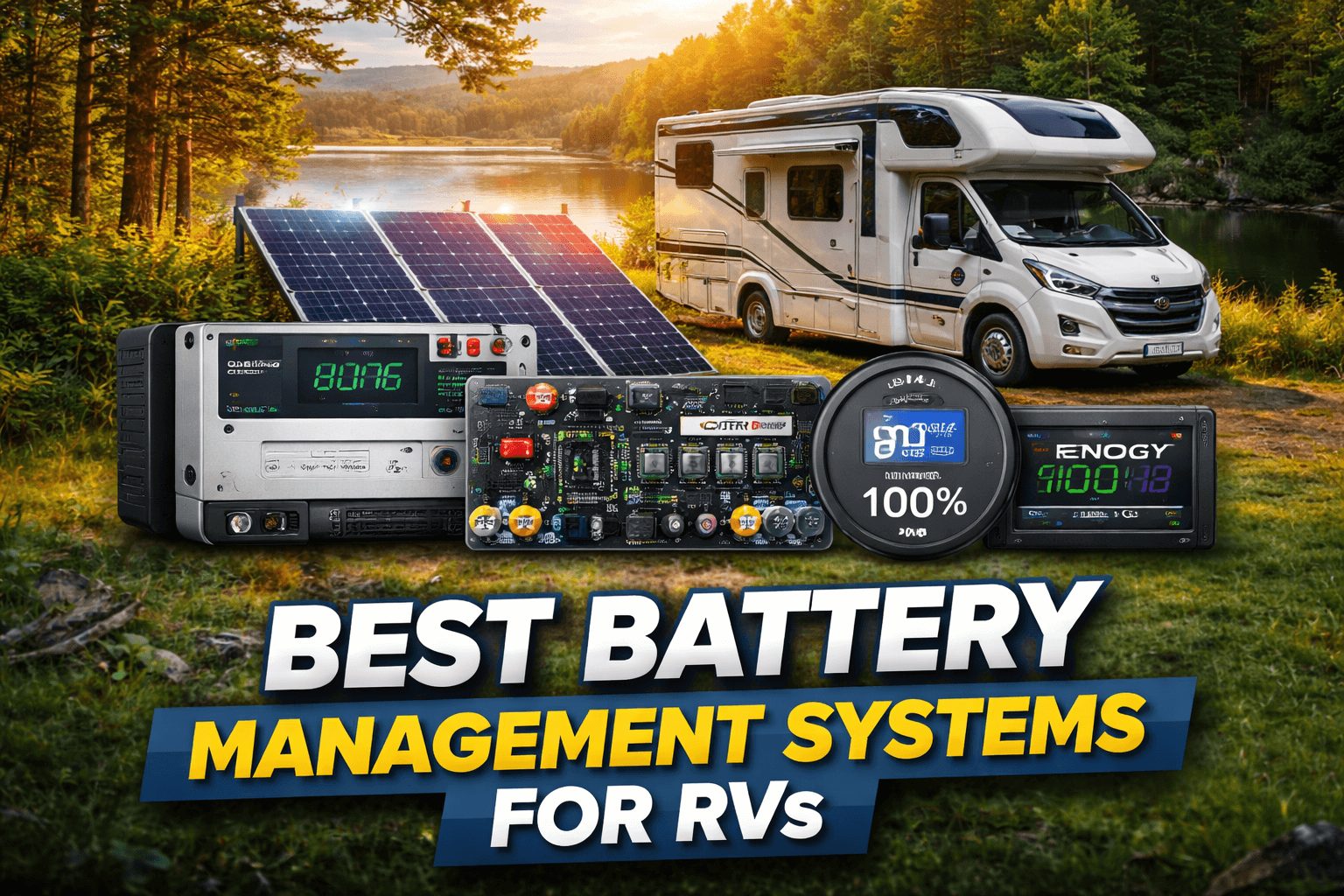
Power is the heart of every RV. Lights, fans, fridges, and devices all depend on batteries. When batteries fail, RV life becomes hard. Many RV owners face issues like dead batteries, short battery life, or sudden power cuts. These problems often come from poor battery care.
This is where a battery management system helps. A good system keeps batteries safe and working well. It controls how power flows in and out. It also protects batteries from damage. This is very important for RVs that use solar power or lithium batteries.
Choosing the best battery management systems for RVs can save money and stress. It also helps you enjoy quiet camping without power worries. In this guide, you will learn what a battery management system is and why it matters for RV use.
What Is a Battery Management System (BMS)?
Simple Definition of a BMS
A battery management system, or BMS, is an electronic system that protects and controls a battery. It makes sure the battery works safely and efficiently. It watches the battery at all times and steps in when something goes wrong.
Difference Between a BMS and a Battery Monitor
A BMS and a battery monitor are not the same. A BMS controls and protects the battery. It can stop charging or discharging if limits are reached. A battery monitor only shows information. It tells you voltage, current, and charge level. It cannot stop damage on its own.
In simple words, a BMS acts, while a battery monitor only reports.
Why RV Batteries Need Management and Protection
RV batteries face heavy use. They power many devices for long hours. Heat, deep discharge, and overcharging can harm them. Lithium batteries are even more sensitive and must be protected.
Without proper management, batteries can fail early. They may also become unsafe. A BMS prevents these risks and keeps the RV power system stable.
Basic Functions of a Battery Management System
A good BMS performs several important tasks:
-
Protection: Stops overcharging, deep discharge, short circuits, and overheating
-
Balancing: Keeps all battery cells at the same voltage
-
Monitoring: Tracks voltage, current, and temperature
-
Control: Manages when power flows in or out
These functions help extend battery life and improve safety. That is why a BMS is a key part of modern RV power systems.
Why RV Owners Need a Reliable BMS
RV batteries work hard every day. They power lights, water pumps, fans, and many other systems. Without proper control, batteries can wear out fast. A reliable battery management system keeps everything safe and balanced.
One key job of a BMS is protection. It stops batteries from overcharging, which can cause heat and damage. It also prevents deep discharge, which drains batteries too much. Both problems can shorten battery life and reduce performance.
A good BMS also helps batteries last longer. By keeping voltage and current within safe limits, it reduces stress on the cells. Balanced cells charge and discharge evenly. This slows down wear and keeps power steady over time.
Safety is another big reason RV owners need a BMS. RVs move often and face vibration, heat, and changing weather. A BMS controls power flow while driving and camping. It lowers the risk of short circuits and sudden power loss.
Modern RVs use many charging sources. Solar panels, shore power, and the vehicle alternator all feed the battery. A reliable BMS helps manage these inputs safely. It makes sure the battery charges the right way from each source.
Most important, a BMS helps avoid costly battery failures. Batteries are expensive to replace. Damage from poor charging or overheating can ruin them early. A proper system protects your investment and gives peace of mind on every trip.
Types of Battery Management Systems Used in RVs
Not all battery management systems work the same way. RV owners can choose from different types based on their power setup and skill level. Each type serves a specific purpose and fits different needs.
All-in-One Battery Management Systems
All-in-one systems handle many tasks in one unit. They manage charging, monitoring, and protection together. These systems control how power comes from solar panels, shore power, and the alternator. They also protect the battery from unsafe conditions.
These systems are ideal for full-time RV owners and off-grid travelers. They reduce wiring complexity and save space. Everything works together smoothly, which lowers the chance of setup errors. While they cost more, they offer strong reliability and easy control for larger RV power systems.
Standalone BMS Boards
Standalone BMS boards focus on battery safety. They are often used in DIY lithium battery packs. These boards protect each battery cell from overcharge, over-discharge, and overheating. They also help balance cells during charging.
This type is best for RV owners who build or upgrade their own battery banks. It requires good wiring knowledge and careful setup. Standalone BMS boards do not charge batteries on their own. They work with chargers and controllers already installed in the RV.
Battery Monitors (Supporting Devices)
Battery monitors track how much power the battery uses and stores. They show voltage, current, and state of charge. Some models also keep usage history and send data to a phone app.
These devices do not protect the battery. They only provide information. A battery monitor works best alongside a real BMS. Together, they give both control and clear insight into battery health. For RV owners who want accurate data, a monitor is a helpful addition, not a replacement.
Best Battery Management Systems for RVs (Top Picks)
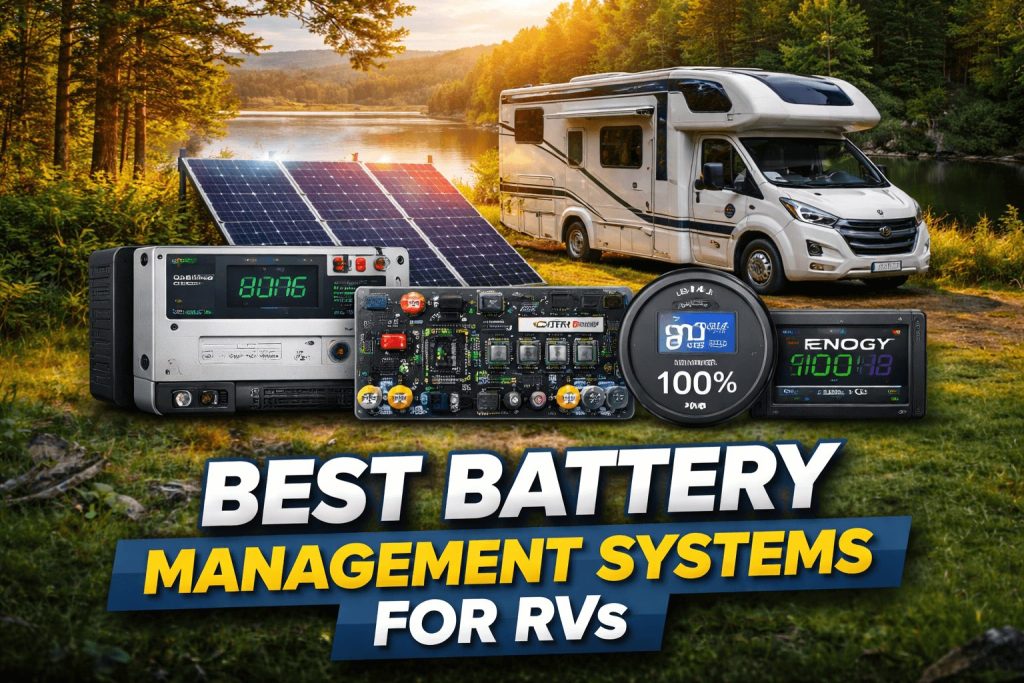
Below are some of the most trusted and widely used battery management systems and monitors for RV use. Each product serves a different type of RV setup, from full-time off-grid living to custom lithium battery builds.
#1 Enerakkus 12V 100Ah LiFePO₄ Battery

The Enerakkus 100Ah LiFePO₄ battery is designed for simple and lightweight RV solar systems. It is significantly lighter than traditional lead-acid batteries and installs easily, making it ideal for small RVs, camper vans, and compact overlanding rigs.
This battery includes a built-in Battery Management System (BMS) that protects against overcharging, over-discharging, overheating, and short circuits. It also features Bluetooth monitoring, allowing users to track battery status and performance directly from a smartphone — a helpful feature for beginners.
Enerakkus focuses on ease of use and compact design. This battery works well for lights, fans, water pumps, and small inverters. It is best suited for RV owners who want a straightforward lithium upgrade without advanced system requirements.
- Voltage: 12V
- Capacity: 100Ah
- Battery Type: LiFePO₄
- Weight: About 23 lbs
- Bluetooth Monitoring: Yes
Pros
- Very lightweight
- Easy to install
- Lower price point
- Good for small solar systems
Cons
- Less known brand
- Shorter track record than premium options
- Warranty support may vary by seller
#2 DALY 12V 500A Battery Management System

The DALY 12V 500A Battery Management System is built for high-power lithium battery banks commonly found in large RV solar systems and custom battery builds. Unlike charging controllers, this BMS focuses entirely on protecting your battery by controlling how power flows in and out.
It is ideal for RV owners running heavy electrical loads such as large inverters, air conditioners, or high-capacity solar setups. With support for extremely high current levels, the DALY BMS is a solid choice for demanding off-grid power systems.
Specifications
- System voltage: 12V lithium battery systems
- Maximum continuous current: Up to 500 amps
- Battery chemistry: LiFePO4
- Cell balancing: Built-in active balancing
- Protection: Overcharge & over-discharge
- Safety features: Short-circuit & temperature protection
- Monitoring: Optional Bluetooth (model dependent)
Pros
- Extremely high current capacity for large RV systems
- Strong protection for lithium battery cells
- Ideal for inverter-heavy RV power setups
- Cell balancing helps extend battery lifespan
Cons
- Does not charge batteries on its own
- Requires advanced wiring knowledge
- Not beginner-friendly for simple RV setups
#3 12V 4S Active BMS Battery Management System

The 12V 4S Active BMS Battery Management System is a compact protection board designed for DIY lithium battery packs commonly used in RV and off-grid power systems. Built for four-cell (4S) lithium configurations, it helps keep each cell protected, balanced, and operating within safe limits.
This BMS is often selected by RV owners who build custom lithium batteries or upgrade factory systems. While it does not control charging sources, it plays a critical role in overall battery safety and long-term performance.
Specifications
- Battery configuration: 12V (4S lithium)
- Cell balancing: Active balancing support
- Voltage protection: Over-voltage & under-voltage
- Current protection: Over-current & short-circuit
- Temperature monitoring: Yes
- Design: Compact board format
Pros
- Affordable solution for DIY RV battery builds
- Improves battery safety and overall stability
- Active balancing helps maintain healthy cells
- Compact size fits tight battery compartments
Cons
- No charging or power source control
- Requires DIY knowledge and careful wiring
- Not suitable for high-current RV systems
#4 Victron Energy BMV-712 Smart Battery Monitor

The Victron Energy BMV-712 Smart Battery Monitor is a high-precision monitoring tool designed to give RV owners complete visibility into their battery system. Unlike a battery management system (BMS), this unit focuses purely on tracking and reporting battery performance.
It works alongside a separate BMS or batteries with built-in protection and allows users to view real-time battery status through a dedicated display or the Victron smartphone app. This makes it ideal for understanding power usage, remaining capacity, and long-term energy trends in RV and off-grid setups.
Specifications
- Voltage range: 6.5V – 70V
- Current measurement: 500A precision shunt
- Connectivity: Built-in Bluetooth
- App support: VictronConnect (iOS & Android)
- Monitors: Voltage, current, state of charge
- Data logging: Historical usage tracking
Pros
- Highly accurate battery readings
- Easy Bluetooth monitoring via smartphone
- Excellent data tracking for RV energy use
- Compatible with many battery types
Cons
- Does not protect or control batteries
- Requires a separate BMS
- Needs proper shunt installation
#5 Renogy 500A Battery Monitor with Shunt

The Renogy 500A Battery Monitor with Shunt is designed to give RV owners a clear and reliable view of their battery system. It displays real-time voltage, current flow, and remaining battery capacity, making it especially useful for RV solar setups and large battery banks.
By providing accurate power data, this monitor helps users manage energy usage more efficiently and avoid unexpected battery drain. Like other battery monitors, it works alongside a BMS or protected batteries but does not replace battery safety systems.
Specifications
- Voltage range: 10V – 120V
- Current capacity: Up to 500A
- Shunt: Precision shunt included
- Display: LCD screen with backlight
- Alerts: Programmable alarms
- Compatibility: Lithium & lead-acid batteries
Pros
- Good value for large RV battery systems
- Easy-to-read display
- Accurate power usage tracking
- Works well with RV solar setups
Cons
- No built-in battery protection features
- Requires proper shunt wiring
- Cannot manage charging or safety on its own
Comparison Table of the Best Battery Management Systems for RVs
Below is a detailed comparison to help you clearly see the differences between the top battery management systems and monitors for RV use. This table highlights key features, compatibility, current capacity, and the best use case for each product.
| Product Name | Type | Battery Compatibility | Current Rating | Best Use Case |
|---|---|---|---|---|
| REDARC Manager30 | All-in-One BMS | Lead-acid, AGM, Gel, LiFePO4 | 30 A charge output | Full RV systems needing combined charging, protection, and solar support |
| DALY 12V 500A BMS | BMS Protection Board | 12 V LiFePO4 systems | Up to 500 A | Large custom lithium battery banks requiring high-current protection |
| 12V 4S Active BMS | BMS Protection Board | 12 V (4S) lithium packs | Moderate (cell-based protection) | DIY battery builds with 4-cell lithium configurations |
| Victron BMV-712 Monitor | Battery Monitor | Lead-acid, LiFePO4, and more | 500 A (via shunt) | RV owners who want detailed battery data and app monitoring |
| Renogy 500A Battery Monitor | Battery Monitor | Lead-acid, LiFePO4, and more | 500 A | Larger RV battery banks with solar systems needing clear usage tracking |
How to Choose the Best Battery Management System for Your RV
Choosing the right battery management system for your RV is not always simple. It depends on your battery type, power needs, charging sources, and how much control and monitoring you want. Below are key factors to consider in detail.
Battery Type (LiFePO4 vs Lead-Acid)
RV owners usually choose between two main battery chemistries: lithium (LiFePO4) and lead-acid (including AGM and gel). Each type needs a different management approach.
-
LiFePO4 Batteries: These are lightweight and long-lasting. They discharge deeply without damage and charge fast. However, they require precise voltage control and strong protection. A proper BMS is essential to prevent overcharging, temperature issues, and cell imbalance.
-
Lead-Acid Batteries: These are more tolerant but have limitations. They can be damaged by deep discharge and need regular equalization charging. A BMS or battery monitor helps protect against deep discharge and keeps the battery in good health.
A BMS that lets you select the correct charging profile for your battery chemistry is ideal.
System Size and Current Needs
Your RV’s electrical load affects which BMS you need. Small RV systems with a single battery may only need basic protection or a monitor. Larger rigs with multiple batteries, inverters, air conditioners, or heavy power use need a system with higher current capacity.
-
Low to Moderate Loads: Systems under 50 A can handle small daily RV needs.
-
High-Power Systems: If your RV uses solar, inverters, large lithium packs, or high-current appliances, you need a BMS or monitor rated for high amps (like 500 A or more).
Make sure the BMS or monitor can handle the peak current your RV may draw.
Solar and Shore Power Integration
Today’s RVs often plug into shore power or use solar panels. A good BMS should manage all power inputs safely.
-
Solar Integration: Solar power varies with light levels. A BMS that includes a solar charge controller (MPPT) will manage the voltage and current from panels into the battery safely and efficiently.
-
Shore Power: When connected to campground electricity, the BMS should work with an AC charger to apply the correct charging voltage.
Some all-in-one systems combine solar charging, alternator charging, and shore power control in one unit. This simplifies installation and reduces wiring.
Ease of Installation
Installation can be a deciding factor, especially for first-time RV owners.
-
Plug-and-Play Monitors: Products like the Victron or Renogy monitors install easily with their included shunts and wiring, and no battery configuration is needed.
-
All-in-One BMS Units: These require more planning and wiring because they connect to multiple power sources. Professionals or experienced DIYers may find this manageable, but beginners might need help.
-
Standalone BMS Boards: These often sit inside a battery box and require precise wiring to each cell. This is best left to experienced builders.
Always follow product instructions and safety guidelines.
Monitoring and Control Needs
Finally, think about how much control and information you want.
-
Basic Monitoring: If you only want to see battery voltage and charge level, a simple monitor is enough.
-
Advanced Monitoring: Bluetooth connectivity and mobile apps let you see detailed data and historical trends. This helps diagnose power issues before they become problems.
-
Full Control: If you want automatic charging control from all power sources and built-in protection, choose a full BMS unit with integrated chargers.
Good monitoring helps you plan power use on long trips and avoid unexpected battery failures.
Common Mistakes RV Owners Make When Choosing a BMS
Many RV owners invest in a battery management system with good intentions. However, small mistakes during selection can lead to poor performance or early battery failure. Understanding these common errors can help you choose the right system from the start.
Buying a Monitor Instead of a Real BMS
One of the most common mistakes is confusing a battery monitor with a battery management system. A monitor only shows data like voltage, current, and battery level. It does not protect the battery. A real BMS controls charging and discharging and can shut down the system if unsafe conditions occur.
RV owners often assume a monitor alone is enough. This can leave lithium batteries unprotected. Always make sure your system includes true battery protection, not just information.
Ignoring Current Ratings
Every RV power system has a maximum current draw. Inverters, appliances, and chargers all pull power at different levels. If a BMS is rated too low, it can overheat or shut down under load.
Some owners choose a BMS based on price instead of capacity. This can cause power loss when heavy loads run. Always match the BMS current rating to your RV’s highest expected power demand.
Not Matching the BMS to Battery Chemistry
Different batteries need different charging rules. Lithium batteries require strict voltage control and balancing. Lead-acid batteries need different charge stages and limits.
Using the wrong BMS can damage the battery or reduce its life. Always confirm the BMS supports your battery type. This step is critical for safe and reliable RV power.
Overlooking Future Power Expansion
Many RV owners upgrade their systems over time. They add solar panels, bigger inverters, or extra batteries. Choosing a small BMS at the start can limit future upgrades.
A system that barely meets current needs may fail later. Planning for future expansion saves money and effort. It also prevents having to replace the BMS too soon.
Installation Tips for RV Battery Management Systems
Installing a battery management system correctly is just as important as choosing the right one. Poor installation can reduce performance and create safety risks.
Safety Precautions
Always disconnect power before starting installation. Wear insulated gloves and use proper tools. Avoid working near exposed terminals. Even low-voltage systems can cause sparks or burns.
Follow the manufacturer’s instructions closely. Never bypass safety features or fuses. These steps protect both the battery and the RV.
Wiring Considerations
Use cables rated for the correct current. Thin wires can overheat and fail. Keep wiring neat and secure to avoid vibration damage while driving.
Make sure all connections are tight and corrosion-free. Poor connections can cause voltage drop and heat buildup. Label cables clearly for future maintenance.
Placement and Ventilation
Place the BMS in a dry and stable location. Avoid areas with high heat or moisture. Good airflow helps prevent overheating, especially for high-current systems.
Do not block vents or mount the unit near heat sources. Proper placement improves reliability and extends system life.
When to Seek Professional Help
Some RV systems are complex. If your setup includes large lithium banks, solar arrays, or inverters, professional installation is wise. A trained technician can ensure correct wiring and safe operation.
Seeking help can prevent costly mistakes. It also gives peace of mind, especially for full-time RV travelers who rely on steady power every day.
Frequently Asked Questions (FAQ)
Do RV lithium batteries need a BMS?
Yes, RV lithium batteries need a battery management system. Lithium batteries are sensitive to voltage, current, and temperature changes. Without a BMS, they can overcharge, overheat, or discharge too deeply. This can damage the battery and create safety risks. A BMS protects each cell, balances voltage, and shuts down the system if unsafe conditions appear. For RV use, a BMS is not optional for lithium batteries. It is essential for safety and long battery life.
Can I use a battery monitor without a BMS?
A battery monitor can be used without a BMS, but it is not enough on its own. A monitor only shows battery data such as voltage and charge level. It cannot stop damage or control charging. For lead-acid batteries, a monitor may help track usage. For lithium batteries, a BMS is required. The best setup uses both together. The BMS protects the battery, while the monitor helps you understand power use.
Is an all-in-one BMS worth the cost?
An all-in-one BMS is worth the cost for many RV owners. These systems combine charging, protection, and monitoring in one unit. They manage solar, shore power, and alternator charging automatically. This reduces wiring complexity and setup errors. For full-time RV users or off-grid travelers, the added reliability and safety often justify the higher price. Smaller RV setups may not need this level of control.
How long does a BMS last in an RV?
A quality BMS can last many years in an RV. Most systems are designed to match the lifespan of the battery. With proper installation and ventilation, a BMS can last five to ten years or more. Harsh heat, poor wiring, and overloads can shorten its life. Regular checks and proper use help ensure long-term performance.
Final Thoughts
A battery management system is a core part of a modern RV power setup. It protects batteries, improves safety, and helps power systems run smoothly. Whether you camp on weekends or live on the road, the right system makes a big difference.
Choosing the best battery management systems for RVs depends on your battery type, power needs, and future plans. Some RV owners need full control with all-in-one systems. Others only need strong protection or clear monitoring. Understanding these differences helps you make the right choice.
A reliable BMS protects your investment and reduces power worries. With proper planning and installation, it supports safe, steady energy for every RV journey.
Read More: Best 12V Deep Cycle Batteries for Overland Travel