A reliable inverter is a must for RVs and camper vans. It helps turn stored battery power into usable energy for daily life. Without a good inverter, many basic comforts stop working. This can make travel harder and less enjoyable.
An inverter works by changing DC power from your RV battery into AC power. AC power is the same type used in homes. Most RV appliances need AC power to run. This includes fridges, coffee makers, TVs, laptops, fans, and small kitchen tools. Even phone chargers and lights often rely on it.
When camping off-grid or during travel days, an inverter becomes your main power source. It allows you to stay connected, cook food, and relax without shore power or a generator. A weak or poorly chosen inverter can cause power drops, device damage, or frequent shutdowns.
The goal of this guide is simple. It helps you find the best inverters for RVs based on real needs. Power size, safety, and ease of use all matter. By understanding how inverters work and what to look for, you can choose one that fits your RV lifestyle and avoids costly mistakes.
Key Factors to Consider When Choosing the Best Inverter for Your RV
Power Output (Watts and Surge Capacity)
Power output is the first thing to check. Inverters are rated by continuous watts and surge watts. Continuous watts show how much power the inverter can supply all the time. Surge watts show how much extra power it can handle for short moments.
Many RV appliances need extra power when they start. Fridges, microwaves, and power tools often draw more watts at startup. If the inverter lacks surge capacity, it may shut off or fail to start the device. Always add up the watts of devices you plan to use together. Then choose an inverter with extra room to handle surges safely.
Battery Voltage Compatibility (12V Systems)
Most RVs use 12V battery systems. Your inverter must match this voltage. Using the wrong voltage can damage both the inverter and batteries. Check your battery bank setup before buying.
Larger inverters draw more power from batteries. This means thicker cables and strong connections are needed. A proper match between battery voltage and inverter helps improve efficiency and prevents overheating. It also protects your RV’s electrical system during long use.
Appliance Load Planning
Planning appliance load helps avoid power problems. Make a list of devices you want to run at the same time. Include their watt ratings. This gives a clear picture of your real power needs.
Many RV owners buy inverters that are too small. This leads to constant overloads and frustration. Others buy oversized units they never fully use. Smart load planning helps balance cost, size, and performance. It ensures smooth power delivery without stressing the system.
Size, Weight, and Installation Space
Inverters take up space. Larger models weigh more and need solid mounting. RVs and camper vans often have limited room. Always measure the installation area before choosing an inverter.
Heavier units may also affect weight balance in smaller vans. Some inverters need space around them for airflow. Tight installations can trap heat and reduce lifespan. Choosing the right size helps with easy installation and better long-term use.
Safety Features and Cooling Systems
Safety is critical in RV power systems. A good inverter includes protection against overload, short circuits, overheating, and low or high voltage. These features protect your devices and reduce fire risks.
Cooling systems also matter. Most inverters use built-in fans to control heat. Poor cooling leads to shutdowns or internal damage. Quiet but efficient fans are ideal for RV living. Strong safety features and proper cooling ensure stable power and peace of mind on the road.
What Is an RV Inverter and How Does It Work?
An RV inverter is a device that changes battery power into usable electricity. RV batteries store DC power. Most household devices need AC power to run. The inverter acts as the bridge between these two power types.
Inside the inverter, electronic circuits adjust the battery’s low-voltage DC power. This power is then reshaped into AC power. The output matches the power used in homes. Once converted, the inverter sends this power to outlets in your RV. You can then plug in and use common devices with ease.
When shore power is not available, the inverter becomes your main power source. It allows you to use lights, charge phones, run laptops, and watch TV. Many RV fridges, fans, and small kitchen tools also rely on it. Without an inverter, these items would not work while off-grid.
Modern RV inverters often include safety and control features. These may include overload protection, temperature control, and automatic shutdown. Some models also come with remote controls or display panels. These features help manage power use and protect both the inverter and your appliances.
In simple terms, an RV inverter lets you enjoy home-style power while traveling. It turns stored energy into something useful and safe. This makes it a key part of any RV or camper van electrical system.
Best Inverters for RVs and Camper Vans (Top Picks)
#1 MKLIHFD 3500W Pure Sine Wave Inverter

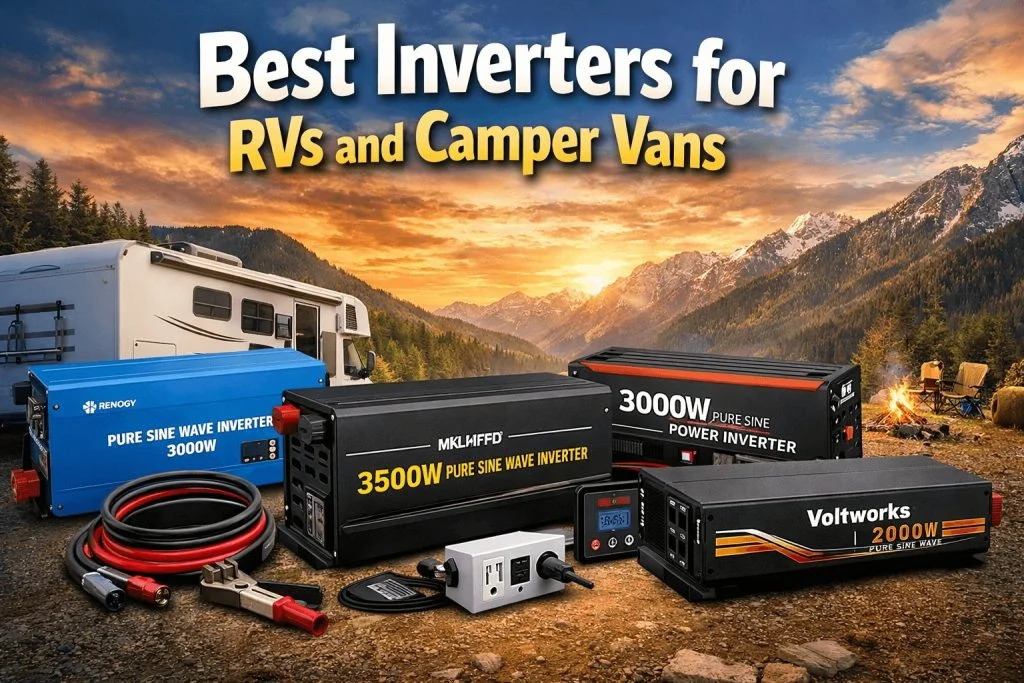
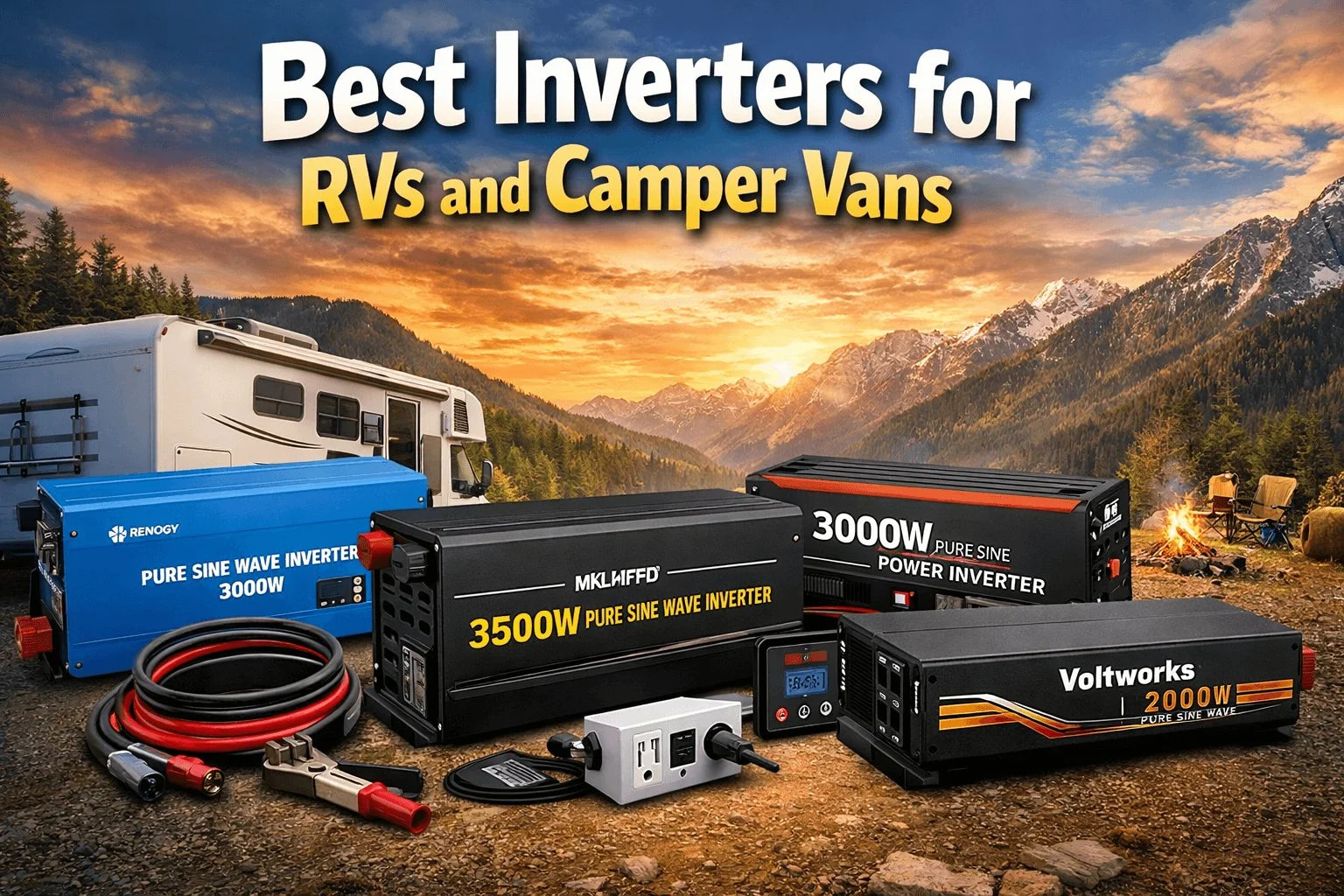
The MKLIHFD 3500W Pure Sine Wave Inverter is built for high-power RV applications, converting 12V battery power into clean, household-style AC electricity. Its pure sine wave output ensures safe operation of sensitive electronics such as laptops, TVs, and modern kitchen appliances.
Designed for full-time RV and off-grid use, this inverter supports multiple appliances simultaneously while delivering stable and reliable power. A convenient remote control allows easy operation from inside the RV, while built-in safety protections and cooling fans help safeguard both the inverter and connected devices during extended use.
- Continuous power output: Up to 3500W
- Surge capacity: High startup surge support
- DC input: 12V system
- AC output: 110–120V
- Waveform: Pure sine wave
- Ports: Multiple AC outlets + USB port
- Cooling: Built-in fans & safety protection
Pros
- Handles heavy RV power loads
- Clean power for sensitive electronics
- Strong surge capacity for appliance startup
- Remote control adds convenience
- Suitable for full-time RV living
Cons
- Large size requires adequate installation space
- High power draw requires a strong battery bank
#2 LANDERPOW 3000W Pure Sine Wave Inverter (Hardwire + Remote)

The LANDERPOW 3000W Pure Sine Wave Inverter is designed for permanent RV and off-grid installations. With hardwire terminal support, it integrates directly into an RV’s electrical system to provide stable and consistent power throughout the vehicle. Its pure sine wave output ensures safe and smooth energy delivery for appliances, tools, and sensitive electronics.
This inverter includes a convenient remote control, allowing users to manage power without accessing the main unit. Built for long-term off-grid living, it balances strong power output, safety features, and efficiency—making it an excellent choice for RV owners who depend on reliable electricity daily.
Specifications
- Continuous output: 3000W
- Surge power: High startup surge support
- Battery system: 12V compatible
- AC output: Pure sine wave
- Installation: Hardwire terminal support
- Control: Remote control included
- Safety: Multiple built-in protections
Pros
- Ideal for permanent RV installations
- Clean and stable pure sine wave output
- Remote operation adds convenience
- Reliable for long-term off-grid use
Cons
- Requires careful wiring during installation
- May be excessive for small camper setups
#3 Renogy 3000W Pure Sine Wave Inverter

The Renogy 3000W Pure Sine Wave Inverter is a reliable and efficient power solution from one of the most trusted brands in RV and solar energy systems. Designed to work seamlessly with solar setups and large battery banks, it delivers clean, stable AC power that helps protect appliances and sensitive electronics.
Built for long-term performance, this inverter integrates smoothly into modern RV electrical systems. It is an excellent choice for RV owners who prioritize durability, efficiency, and brand reliability when living or traveling off-grid.
Specifications
- Continuous power: 3000W
- Surge capacity: High surge rating
- Battery system: 12V support
- Output type: Pure sine wave
- Connections: AC outlets
- Control: Remote capability
- Cooling & safety: Advanced cooling and protection
Pros
- Trusted Renogy brand reputation
- Excellent compatibility with solar systems
- Stable and efficient power delivery
Cons
- Higher price than generic inverter models
- Larger footprint than basic inverters
#4 Renogy 100W Portable Foldable / Suitcase Panel Voltworks 2000W Pure Sine Wave Inverter

The Voltworks 2000W Pure Sine Wave Inverter is a compact and efficient power solution designed for smaller RVs, camper vans, and weekend travel setups. It delivers enough clean power to run essential devices such as lights, TVs, laptops, and small kitchen appliances without risking damage to sensitive electronics.
This inverter is ideal for travelers who want reliable off-grid power without heavy electrical demands. Its smaller footprint allows for easy installation in tight spaces, making it a practical choice for light to medium RV power needs.
Specifications
- Continuous output: 2000W
- Surge capacity: Moderate surge power
- Input voltage: 12V DC
- Output type: Pure sine wave AC
- Ports: AC outlets & USB ports
- Cooling: Built-in cooling system
Pros
- Compact and lightweight design
- Easy installation in small RVs
- Good value for light to medium power needs
Cons
- Not suitable for high-power appliances
- Limited capacity for running multiple devices at once
Comparing the Best Inverters for RVs
Choosing the right inverter for your RV means more than just picking the biggest number. You need to understand how size, power, and cost work together. Below we compare the top models based on several key factors.
Power Output Comparison (2000W vs 3000W vs 3500W)
The power output of an inverter tells you how many watts it can supply continuously and how much it can handle in short surges. This determines which appliances you can run at once.
-
2000W Inverters
A 2000W inverter like the Voltworks 2000W Pure Sine Wave Inverter is great for basic RV needs. It can power lights, phones, laptops, and small kitchen appliances. However, it may struggle with high-draw devices like microwaves or air conditioners. If you plan to run only small gadgets and a few essentials, 2000W is efficient and cost effective. -
3000W Inverters
3000W models such as the Renogy 3000W Pure Sine Wave Inverter and LANDERPOW 3000W Pure Sine Wave Inverter hit the middle ground. They provide strong continuous power and higher surge capacity than 2000W units. These are ideal for medium to larger RVs that run multiple appliances at once. They handle fridges, TVs, and smaller kitchen tools simultaneously without strain. -
3500W Inverters
The MKLIHFD 3500W Pure Sine Wave Inverter offers the highest output in this guide. It is perfect when you need to power heavy loads or multiple devices at once. With a strong surge capacity, it can handle starting loads for motors and larger appliances. For full-time RV living or extended off-grid use, this power level offers the most flexibility but comes with greater battery draw and higher cost.
Size and Installation Needs
Inverter size affects both installation and performance. Larger models typically weigh more and need more space. Smaller inverters are easier to install and fit into compact areas. Here’s how the size differences matter:
-
2000W Inverters are more compact and easier to mount in tight spaces. They are ideal for camper vans or small RVs with limited storage room.
-
3000W Inverters require moderate space and may need additional ventilation. They fit well in mid-size RVs where power and space are balanced.
-
3500W Inverters are larger and heavier. They need solid mounting locations and good airflow to avoid overheating. They work best in larger RVs with dedicated inverter compartments.
Proper installation ensures cooling airflow, safety, and easy access for maintenance. Poor placement can reduce efficiency and shorten the lifespan of the inverter.
Best Option for Small Vans vs Large RVs
Your RV type strongly affects inverter choice:
-
Small Camper Vans – These usually don’t need very high power. A 2000W inverter like the Voltworks model is often enough. It provides power for lights, phones, laptops, and compact appliances without excessive battery drain.
-
Mid-Size RVs – These may benefit most from a 3000W inverter. It handles multiple devices and offers room to grow your power needs.
-
Large RVs – Larger RVs with more appliances or off-grid systems should consider a 3500W unit. The MKLIHFD 3500W inverter gives the headroom needed for fridges, microwaves, and more electronics at once.
Matching your inverter to your RV size helps prevent wasted money and ensures smooth performance.
Value for Money Breakdown
Choosing an inverter is about balancing cost with performance:
-
2000W Inverters offer value for those with light power needs. They are more affordable and still provide pure sine wave power. For occasional camping or weekend trips, they are a smart buy.
-
3000W Inverters give a strong mix of power and cost efficiency. They cover most daily RV needs and are a popular choice for many RV owners.
-
3500W Inverters cost more upfront and usually draw more battery power. However, they deliver higher performance and flexibility for high-demand use. If you need to run heavy appliances or want peace of mind with extra power, this level gives the best long-term versatility.
Always consider how often you will use your inverter at higher loads. Spending more makes sense if heavy use is common.
Common Mistakes RV Owners Make When Buying Inverters
Buying an inverter is an important decision, and small mistakes can lead to big problems. Below are common errors that many RV owners make and how to avoid them.
Choosing Too Little Power Capacity
One of the most frequent mistakes is choosing an inverter with too low power. When you underestimate your load, the inverter may shut down or fail. For example, a 2000W unit might run small devices fine, but struggle with a refrigerator and microwave together. Always total the watts of all appliances you plan to use at once and then add a safety margin. This helps choose the right size.
Ignoring Surge Requirements
Many devices need extra power when they start. This is called the surge requirement. Even if the continuous wattage looks sufficient, ignoring surge power can cause shutdowns or stress on the inverter. Motors in fridges and pumps often need surge power. Always check both continuous and surge ratings before buying.
Overlooking Battery and Cable Limits
The inverter is only one part of the power system. Your batteries and cables must support the power draw too. Using thin cables or weak battery connections limits performance and can be dangerous. Undersized cables can overheat, cause voltage drops, or trigger safety shutdowns. Always match cable thickness and battery capacity to your inverter’s demands.
Buying Modified Sine Wave by Mistake
Some cheaper inverters use modified sine wave output. These are lower cost but not ideal for modern electronics. Modified wave inverters can cause buzzing in audio gear, poor performance, or even damage sensitive devices. Pure sine wave inverters mimic true AC power from the grid and are safer for TVs, laptops, and kitchen tools. Always check the waveform type and avoid modified sine wave for RV living.
Installation Tips for RV Inverters
Installing an inverter in your RV is more than just plugging it in. Proper setup ensures safety, good performance, and long life for both the inverter and your RV’s electrical system. Below are step-by-step installation tips that matter.
Placement and Ventilation Basics
Where you place the inverter in your RV is very important. Inverters produce heat while running. If they are installed in a tight, unventilated area, heat can build up quickly. This can cause the inverter to overheat and shut down or fail early.
Choose a location that has good airflow. Many RV owners pick an inverter bay, under a seat, or in a cabinet with vents. The key is space around the unit so cool air can flow in and hot air can escape. Never block the fan or airflow holes on the inverter.
Also, make sure the inverter is mounted on a flat, stable surface. This prevents vibration damage while driving. Use sturdy mounting screws or brackets to secure it in place. Keep the inverter away from water and moisture to prevent shorts or corrosion.
Battery Cable Sizing Importance
Battery cables are like the arteries of your RV’s power system. If cables are too thin, they can’t carry enough current. This leads to voltage drops, overheating, and stress on battery and inverter connections.
Always use cables that match the inverter’s power needs and the distance from the battery. Larger inverters (like 3000W and 3500W) require thicker gauge cables (lower gauge number means thicker cable). This ensures stable power delivery and reduces heat buildup in the wires.
For example, a 2000W inverter might need 2–4 AWG cables, while larger 3000–3500W inverters may need 0–2 AWG cables. Check the inverter’s manual for recommended cable sizes. Always choose heavy-duty, marine-rated cables designed for high current use.
Safety and Fuse Protection
Safety should never be optional when working with DC and AC power. Proper fuses and breakers protect your system from short circuits and overloads. Place a fuse or circuit breaker close to the battery on the positive cable. This protects against accidental shorts between the battery and inverter.
Fuse sizes depend on the inverter’s maximum draw. The manual or product specs will guide you on correct ratings. Too small a fuse trips often. Too large a fuse defeats protection and can allow fire-risk faults.
Also install proper AC breakers between the inverter and your RV’s AC distribution panel. This ensures your AC system is protected from overloads or wiring faults.
Always label cables and circuits to help with future maintenance and troubleshooting.
When to Choose Professional Installation
Some RV owners feel confident installing an inverter themselves. But in many cases, professional installation is the safest choice.
Here are situations where you should hire an expert:
-
You plan to hardwire the inverter into the RV’s AC distribution panel.
-
You do not understand DC wiring, gauges, or fuse placement.
-
Your RV uses complex solar systems or battery banks.
-
You are unsure about ventilation planning or grounding.
A certified RV electrician ensures correct cable routing, proper grounding, correct fuse placement, and code-compliant installation. This not only improves safety but also prevents damage that could be costly to fix later.
Frequently Asked Questions (FAQ)
What Size Inverter Do I Need for My RV?
The size of inverter you need depends on what you plan to run. Start by listing all appliances you want to use simultaneously. Add their rated watts to find total power demand.
-
For basic needs (lights, phone chargers, small appliances), a 2000W inverter often works well.
-
For larger RVs with fridges, TVs, and several devices at once, a 3000W inverter is a strong choice.
-
For heavy power use (microwaves, multiple devices at once), a 3500W inverter gives extra capacity.
Always include a safety margin of about 20 % above your estimated load. This prevents overloads and ensures stable operation.
Are Pure Sine Wave Inverters Worth It?
Yes, pure sine wave inverters are worth the investment for RVs. They produce smooth, clean AC power that matches what you get from shore or home outlets. This is especially important for sensitive electronics like laptops, TVs, medical equipment, and some kitchen appliances.
Cheaper modified sine wave inverters can cause buzzing, poor performance, or even damage sensitive gear. For long-term RV use, pure sine wave models protect your devices and provide safer, more efficient power.
Can an Inverter Run an RV Air Conditioner?
Running an RV air conditioner with an inverter is possible but requires a very large system. Air conditioners have high surge power needs, especially at startup. A typical RV AC might need 3000–4000W or more just to start, and then high continuous power.
To run an air conditioner from an inverter system, you also need a large battery bank and possibly solar or generator support. Small or mid-size inverters often cannot handle these loads. For most RV owners, air conditioners are better run from shore power or a dedicated generator.
How Long Will an Inverter Run on Batteries?
Battery life depends on two main things: the size of your battery bank and the load you place on it.
Inverters draw DC power from your batteries. The heavier the load (more watts used), the faster batteries drain. For example:
-
With a small battery bank and light use (lights, phone charges), you may get many hours of power.
-
With heavy loads (TV, microwave), batteries will drain much quicker.
To increase run time, you can add more batteries, choose deep-cycle models, or include solar charging. Always plan battery capacity based on your expected usage and travel style.
Final Thoughts
Choosing and installing the right inverter makes a big difference in your RV or camper van experience. A reliable inverter brings home-style power to the road, lets you stay off-grid longer, and keeps your electronics safe.
Careful planning means knowing how much power you need, what appliances you want to run, and how your RV is wired. Consider inverter size, placement, safety features, and installation needs. Pure sine wave models are the best choice for most RV owners because they deliver clean, safe power for sensitive devices.
Proper installation with correct cables, ventilation, and protection keeps your inverter and RV electrical system working longer. Whether you install it yourself or get a professional, taking the time to do it right pays off with peace of mind and reliable power wherever you go.
Your RV adventure becomes better when you don’t worry about power. With the right inverter and setup, your lights stay bright, your devices stay charged, and your time on the road stays smooth. Enjoy the freedom of the open road with reliable energy you can count on.
Read More: Best Battery Management Systems for RVs