Overlanding is all about travel, freedom, and time spent far from cities. Power plays a big role in these trips. You need electricity for lights, fridges, phones, and safety gear. Without power, even a short trip can become stressful.
Solar generators solve this problem. They give clean and quiet power anywhere. You do not need fuel or loud engines. You only need sunlight and a good setup. This makes them perfect for long stays in remote places.
Modern solar generators are built for travel. They are strong, portable, and easy to use. Many models charge fast and store enough energy for several days. This helps overlanders stay off-grid longer without worry.
Choosing the best solar generators for overlanding is important. The right unit keeps your food cold, devices charged, and camp running smoothly. This guide helps you understand how solar generators work and why they are a smart choice for overlanding adventures.
What Is a Solar Generator for Overlanding?
A solar generator is a portable power system. It stores electricity in a built-in battery. You can use that stored power to run devices and tools. Unlike fuel generators, it does not burn gas or diesel. This makes it safer and cleaner for outdoor use.
Solar generators are made for off-grid travel. Overlanders use them to power campsites, vehicles, and small RV setups. They work well in remote areas where fuel and grid power are not available.
Simple Explanation of Solar Generators
A solar generator collects energy from the sun. It stores that energy in a battery. You then use that power when needed. The process is simple and reliable.
You place solar panels in direct sunlight. The panels collect solar energy. That energy flows into the power station. The stored power is then ready for use at any time, day or night.
Key Components of a Solar Generator
Solar generators have two main parts. Both parts work together to provide power during overlanding trips.
Battery Power Station
The battery power station is the heart of the system. It stores all the energy. It also controls how power flows to your devices.
Most power stations include:
-
AC outlets for appliances
-
USB ports for phones and cameras
-
DC ports for fridges and vehicle gear
The battery capacity decides how long you can stay powered. Larger batteries last longer but take more space.
Solar Panels
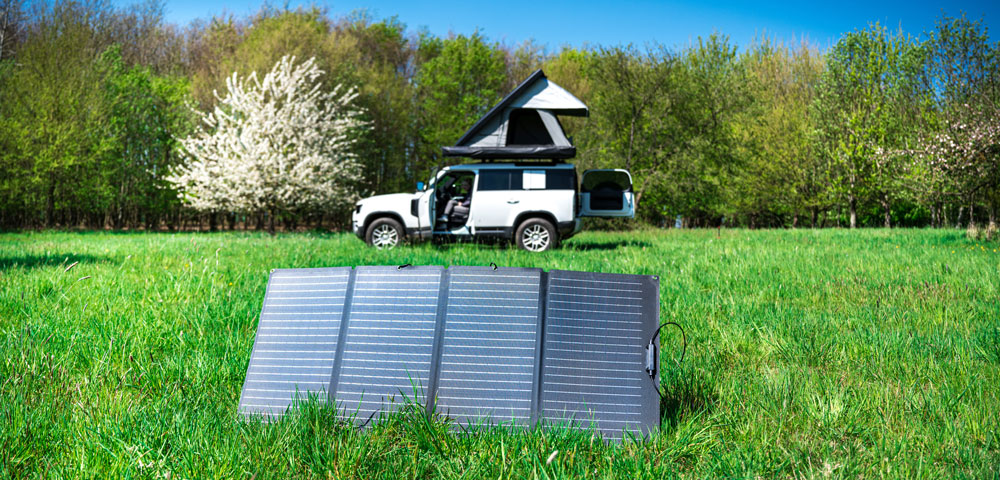
Solar panels collect energy from sunlight. They connect directly to the power station. Portable panels are common for overlanding.
Many panels fold for easy storage. You can move them to follow the sun. This helps you charge faster in changing light conditions.
How Solar Generators Work in Off-Grid Environments
Solar generators work well in remote areas. They do not need fuel stations or power lines. Sunlight is the only energy source.
During the day, panels charge the battery. At night, the battery powers your gear. This cycle continues as long as there is sunlight.
Overlanders can also charge while driving. Some systems connect to vehicle outlets. This adds extra power when sunlight is limited.
Difference Between Solar Generators and Traditional Generators
Traditional generators run on fuel. They create noise, heat, and fumes. This can disturb wildlife and nearby campers.
Solar generators are silent. They produce no smoke. They are safe to use inside tents, vehicles, and RVs. Maintenance is also very low.
Fuel generators need regular refills and servicing. Solar generators only need sunlight and basic care.
Why Overlanders Prefer Portable Power Stations
Portable power stations are easy to move and store. They fit well in overland vehicles. Most models are ready to use right out of the box.
Overlanders prefer them because they are reliable. They work in many environments. They also support modern electronics.
For these reasons, the best solar generators for overlanding have become a key part of modern off-grid travel setups.
Why Solar Generators Are Ideal for Overlanding Adventures
Solar generators fit perfectly with the overlanding lifestyle. They support long trips, remote travel, and self-reliant camping. Unlike other power sources, they work with nature instead of against it.
Freedom From Fuel Dependency
Fuel can be hard to find in remote areas. Carrying extra fuel also takes space and adds risk. Solar generators remove this problem.
You do not need gas or diesel. Sunlight becomes your power source. This freedom allows you to travel farther and stay longer without worry.
Ability to Recharge While Driving or Camping
Solar generators offer flexible charging options. You can recharge them while parked at camp. You can also charge them while driving.
Many systems connect to vehicle outlets. Some work with roof-mounted solar panels. This keeps your battery topped up during travel.
This flexibility is helpful when weather changes. It also helps during long overlanding routes.
Silent Operation in Nature
Overlanding is about peace and quiet. Loud generators break that experience. Solar generators work in complete silence.
You can enjoy nature without noise. Wildlife stays undisturbed. Camps feel calm and relaxing.
Silent power also makes night use easier. You can run lights or fridges without any sound.
Clean and Eco-Friendly Power
Solar generators produce no fumes. They do not pollute air or soil. This makes them safe for people and the environment.
Using solar power supports responsible travel. It helps protect the places you explore. This matters to many overlanders who value nature.
Long-Term Cost Savings
Fuel generators require ongoing spending. Fuel costs add up over time. Maintenance also costs money.
Solar generators cost more at first. Over time, they save money. Sunlight is free and unlimited.
With proper care, a solar generator can last for many years.
Suitable for Remote and Extended Trips
Remote trips demand reliable power. Solar generators provide steady energy for days or weeks.
They work well in deserts, forests, and mountains. As long as there is sunlight, power is available.
This reliability makes solar generators a smart choice for extended overlanding adventures.
Key Features to Look for in the Best Solar Generators for Overlanding
Choosing the right solar generator is important for overlanding. Not all power stations work well in off-grid travel. The features below help you pick a unit that matches real overlanding needs.
Battery Capacity (Wh)
Battery capacity shows how much energy a solar generator can store. It is measured in watt-hours. A higher number means longer runtime.
Most overlanders need enough power for fridges, lights, and device charging. A small setup may work with a lower capacity. Longer trips often need more stored power.
If you camp for several days, higher capacity is better. It reduces the need for constant recharging. This makes camp life easier and more reliable.
Power Output (Watts)
Power output tells you what devices the generator can run. It is measured in watts.
Fridges, cooking tools, and power tools need more watts. Low-output units may not handle these loads. High-output generators run more gear at the same time.
Always check the continuous output rating. This matters more than peak power. It helps avoid overloads during daily use.
Solar Charging Speed
Fast solar charging is key for overlanding. Weather and daylight change often.
A generator with higher solar input charges faster. This helps during short stops or cloudy days. It also allows better use of limited sunlight.
Fast charging means more power by evening. This is important for night use and cold storage.
Battery Type (LiFePO4 vs Others)
Battery type affects safety and lifespan. Many modern units use LiFePO4 batteries.
LiFePO4 batteries last longer. They handle more charge cycles. They are also more stable and safer.
Other battery types may cost less. They usually wear out faster. For long-term travel, LiFePO4 is a better choice.
Port Selection
Port options decide what you can connect. Overlanders use many devices.
AC ports run appliances. DC ports power fridges and vehicle gear. USB-A and USB-C charge phones and cameras.
More ports mean more flexibility. Good port layout also helps manage cables in tight spaces.
Size and Weight
Space is limited in overland rigs. Heavy gear affects handling and storage.
A compact generator is easier to pack. Lighter units are easier to move around camp.
Balance size with power needs. Too small limits use. Too large wastes space.
Durability and Build Quality
Overlanding exposes gear to dust, heat, and rough roads. A strong build matters.
Look for solid casing and protected ports. Good ventilation helps in hot climates.
A durable solar generator survives travel stress. This ensures reliable power in challenging conditions.
Best Solar Generators for Overlanding Adventures (Top 4 Picks)
#1 EF ECOFLOW DELTA 2 Solar Generator

The EF ECOFLOW DELTA 2 Solar Generator is a powerful and fast-charging solution built for off-grid travel and overlanding. It supports high solar input and easily handles daily camp power needs such as fridges, tools, and electronics. Its compact design fits well in trucks, SUVs, and vans, making it a reliable choice for mobile adventurers who need speed, flexibility, and performance.
- Battery Capacity: 1024Wh
- Battery Type: LiFePO₄
- Continuous Output: 1800W
- Surge Power: Up to 2700W
- Solar Input: Up to 500W
- Ports: AC outlets, USB-A, USB-C, and DC ports
- Very fast charging with solar or AC
- Long battery life with LiFePO₄ cells
- High power output for fridges and tools
- Compact for its power level
- Higher price than basic models
- Extra batteries increase total weight
- Fan noise during fast charging
#2 Jackery Solar Generator 1000 v2

The Jackery Solar Generator 1000 v2 is a reliable and beginner-friendly power solution popular among campers and overlanders. It is easy to set up and handles common off-grid needs such as charging devices, running lights, and powering small appliances. This model offers a well-balanced mix of power, size, and portability, making it a solid choice for users who want simplicity and dependable performance.
- Battery Capacity: 1070Wh
- Battery Type: Lithium
- Continuous Output: 1500W
- Surge Power: 3000W
- Solar Input: Up to 400W
- Ports: AC, USB-A, USB-C, and DC outputs
- Simple controls and beginner-friendly
- Lightweight for its capacity
- Trusted brand with strong customer support
- Good solar panel compatibility
- Shorter battery lifespan than LiFePO₄ models
- Slower charging than some competitors
- Limited expandability
#3 Anker SOLIX C1000 Portable Power Station

The Anker SOLIX C1000 Portable Power Station is designed for users who demand fast charging and smart power management. It delivers strong output in a compact form, making it ideal for overlanders running tech-heavy setups. With advanced charging technology and app-based monitoring, this unit offers both performance and control for modern off-grid travel.
- Battery Capacity: 1024Wh
- Battery Type: LiFePO₄
- Continuous Output: 1800W
- Surge Power: 2400W
- Solar Input: Up to 600W
- Ports: AC, USB-A, USB-C, and DC outputs
- Extremely fast recharge time
- High solar input support
- Long battery cycle life
- Smart app monitoring
- App setup may feel complex for some users
- Higher cost due to advanced features
- Limited physical expansion options
#4 SeeDevil Portable Power Station (2000W, 2131Wh)

The SeeDevil Portable Power Station delivers a very large battery capacity at a more affordable price point. Built for RVs, vans, and overlanding rigs, it’s ideal for travelers who stay in one location longer and need extended runtimes. With strong output and multiple charging options, this unit handles multiple devices and heavier loads with ease.
- Battery Capacity: 2131Wh
- Battery Type: Lithium
- Continuous Output: 2000W
- Surge Power: 4000W
- Solar Input: Up to 800W
- Ports: Multiple AC outlets and USB ports
- Very large battery capacity
- Strong continuous and surge power output
- Good value for extended trips
- Can run heavy loads for longer periods
- Heavy and bulky design
- Lesser-known brand
- Shorter battery cycle life compared to LiFePO₄
Comparison Table – Best Solar Generators for Overlanding
| Solar Generator | Battery Capacity | Continuous Power Output | Battery Type | Solar Input Support | Weight & Portability | Best Use Case |
|---|---|---|---|---|---|---|
| EF ECOFLOW DELTA 2 | 1024Wh | 1800W | LiFePO4 | Up to 500W | Compact but solid weight; easy to store in SUVs and trucks | Fast-moving overlanders who need quick charging and strong output |
| Jackery Solar Generator 1000 v2 | 1070Wh | 1500W | Lithium | Up to 400W | Lightweight and easy to carry; good for limited space | Beginner and mid-level overlanders with basic power needs |
| Anker SOLIX C1000 | 1024Wh | 1800W | LiFePO4 | Up to 600W | Portable design with balanced weight; needs careful packing | Tech-heavy setups needing fast charging and smart control |
| SeeDevil Portable Power Station (2000W) | 2131Wh | 2000W | Lithium | Up to 800W | Heavy and bulky; best for larger rigs | Extended trips and base-camp overlanding with high power demand |
This comparison helps match the right solar generator to your overlanding style, space limits, and power needs.
How to Choose the Right Solar Generator for Your Overlanding Style
Every overlander travels differently. The right solar generator depends on how you travel, who travels with you, and what gear you carry.
Weekend Trips vs Long Expeditions
Short trips need less power. A mid-size solar generator often works well. It can run lights, charge devices, and power a fridge for a short time.
Long expeditions need more capacity. You may camp in one place for days. A larger battery reduces stress and limits charging needs. This is important when sunlight is limited.
Solo Travelers vs Family Setups
Solo travelers use less power. Phones, cameras, and a small fridge are common needs. A compact generator keeps things simple and light.
Family setups use more energy. Multiple devices charge at once. Lights and cooking tools run longer. A higher-capacity generator helps avoid power shortages.
Power-Hungry Gear vs Basic Needs
Some gear uses a lot of power. Electric coolers, cooking gear, and tools drain batteries fast. These setups need higher output and larger capacity.
Basic needs require less power. Charging phones and running lights uses little energy. Smaller units handle these tasks well and save space.
Roof-Mounted Solar vs Portable Panels
Roof-mounted panels charge while driving. They work well for constant travel. They save ground space at camp.
Portable panels offer flexibility. You can move them into full sun. This works better in shaded camps. Many overlanders use both for best results.
Solar Generator Setup Tips for Overlanding
A good setup helps your solar generator perform better. Small changes can improve charging and battery life.
Panel Placement for Maximum Sun
Place panels in direct sunlight. Avoid shade from trees or vehicles. Adjust panel angle during the day for better results.
Clean panels often. Dust reduces charging efficiency. Even light dirt can lower output.
Managing Power Usage at Night
Nighttime power is limited to stored energy. Turn off unused devices. Use low-power lights when possible.
Plan heavy use during the day. Let solar panels handle higher loads. This saves battery power for night use.
Charging While Driving
Use vehicle charging options. This adds power during travel. It helps on cloudy days or short stops.
Charging while driving keeps batteries ready. It also reduces downtime at camp.
Battery Care in Hot and Cold Weather
Heat and cold affect batteries. Avoid placing generators in direct sun for long periods. Provide airflow to prevent overheating.
In cold weather, keep batteries insulated. Cold reduces efficiency. Proper care helps extend battery life and ensures reliable power.
Common Mistakes Overlanders Make When Buying Solar Generators
Buying the wrong solar generator can cause problems during a trip. Many overlanders make simple mistakes that affect comfort and reliability.
Choosing Too Little Capacity
Small batteries drain fast. Many people underestimate their power needs. Fridges, lights, and devices add up quickly.
A low-capacity unit may work at first. It often fails on longer trips. Choosing extra capacity gives peace of mind and flexibility.
Ignoring Solar Input Limits
Some generators charge slowly from solar. This limits how much power you can collect each day.
High solar input is important. It helps recover power faster. Always check how many watts the generator can accept from panels.
Overlooking Weight and Storage Space
Large generators can be heavy. They also take up valuable space.
Overlanding vehicles have limited room. Balance power needs with storage limits. A unit that is too large becomes a burden.
Not Planning Future Power Needs
Power needs often grow. New gear gets added over time.
Buying a generator with no room to grow causes early upgrades. Planning ahead saves money and effort.
Final Thoughts
Solar generators have changed the way people overland. They provide clean, quiet, and reliable power in remote places. With the right setup, you can stay off-grid longer and travel with confidence.
The best solar generators for overlanding depend on your trip style, gear, and space. Some travelers need fast charging. Others need long runtime. Understanding your needs helps you choose wisely.
A well-chosen solar generator supports comfort and safety. It also protects the natural places you explore. With careful planning, your overlanding adventures become easier, quieter, and more enjoyable.